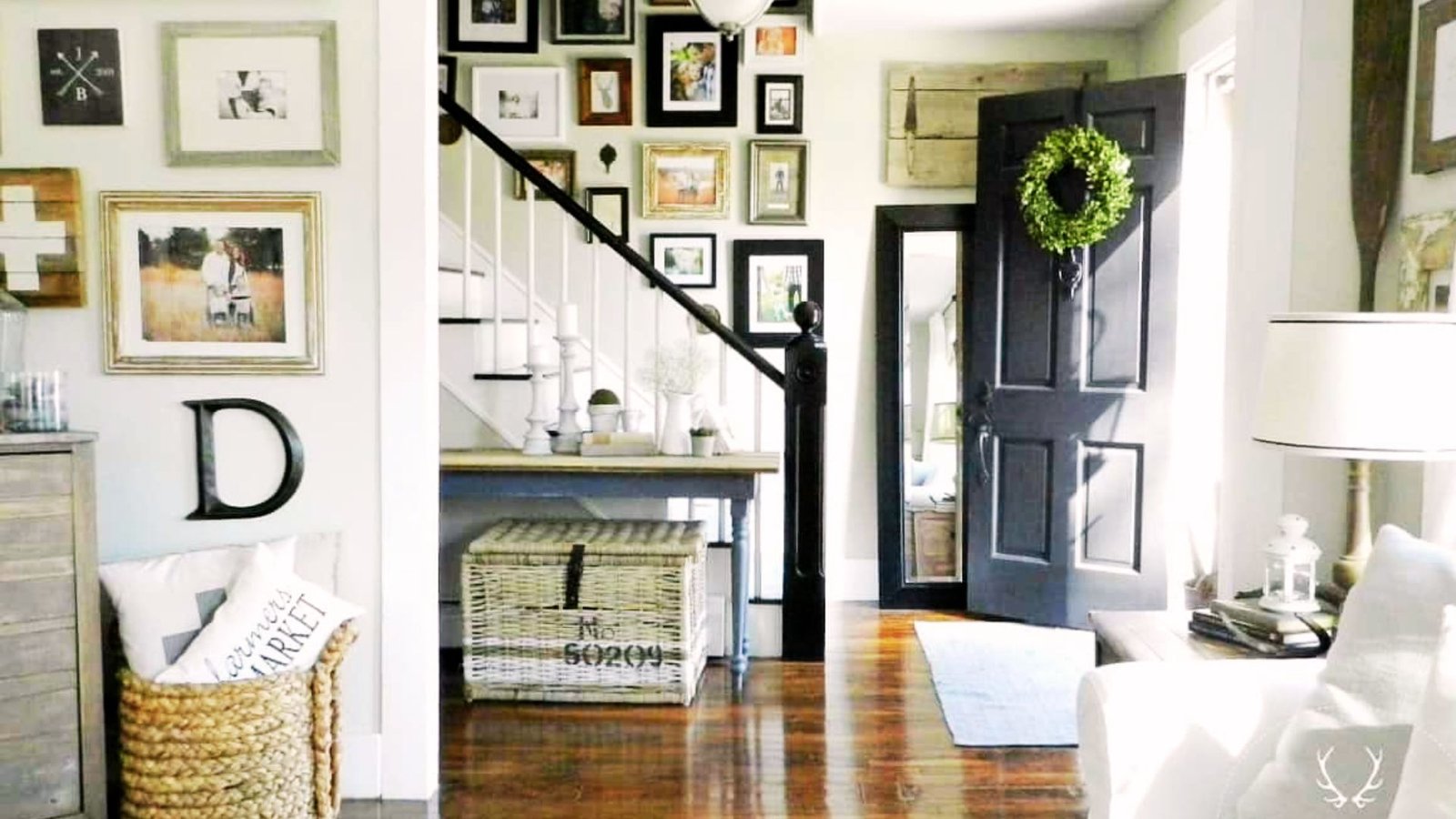
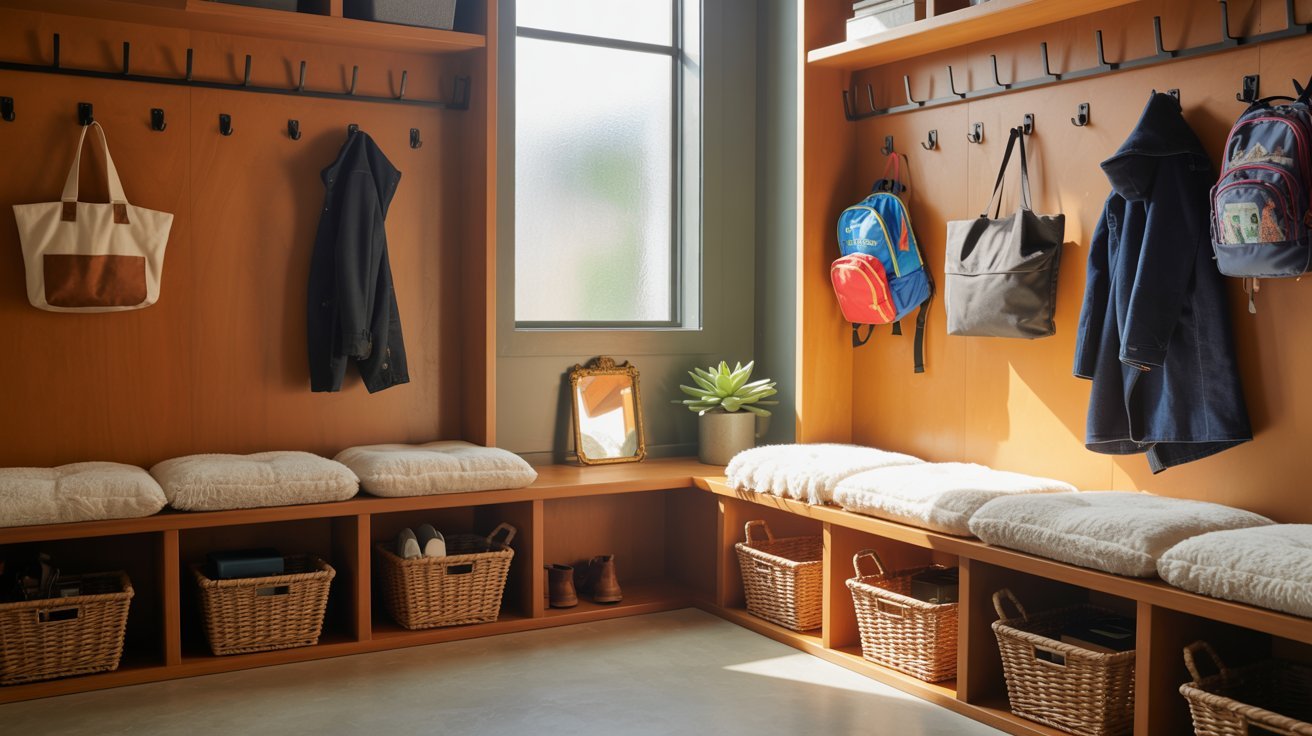

I've walked into a lot of entryways. Messy ones, bare ones, and ones that made me stop and think, "how is this so organized?"
The difference almost always came down to one thing: a proper mudroom drop zone.
I started paying close attention after my own entry became impossible to manage. Bags on the floor, shoes kicked everywhere, keys never in the same spot twice. It was exhausting.
So I went deep on what actually works. What I found surprised me. You don't need a big space or a big budget. You just need the right setup.
Let's get into it.
What Is a Mudroom Drop Zone?
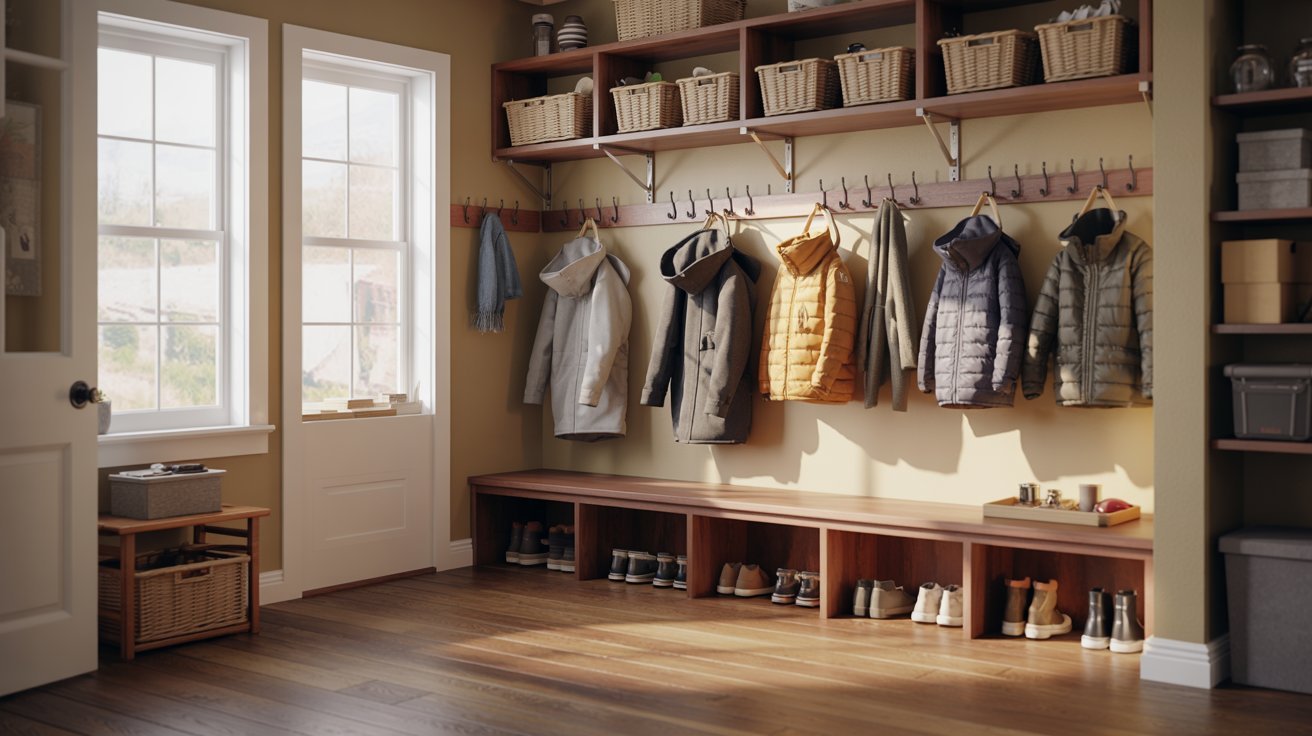
A mudroom drop zone is a dedicated spot near your entryway where everyday items land when you walk through the door.
Think shoes, bags, coats, keys, and anything else your family carries in and out daily.
The whole point is to give everything a home. When each item has a specific place, clutter stops spreading through the rest of the house.
It also cuts down on that frantic morning search for missing shoes or keys. When your drop zone is set up well, everything is exactly where you left it.
More homeowners are making this a priority now because it genuinely improves how a home functions day to day.
19 Mudroom Drop Zone Ideas for a Stylish and Functional Entryway
There's no single right way to set up a drop zone. The best one fits your space, your family, and how you actually live. Here are 19 ideas to get you started.
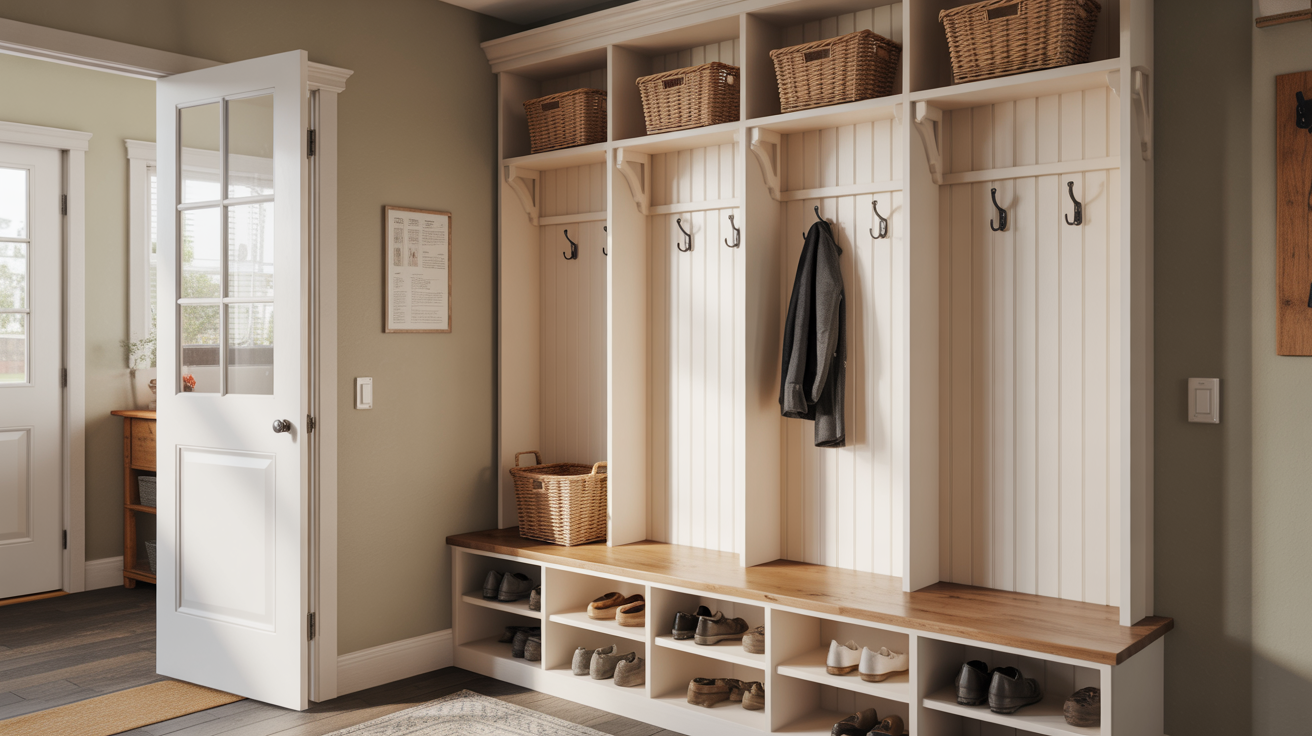
1. Built-In Bench With Hidden Storage
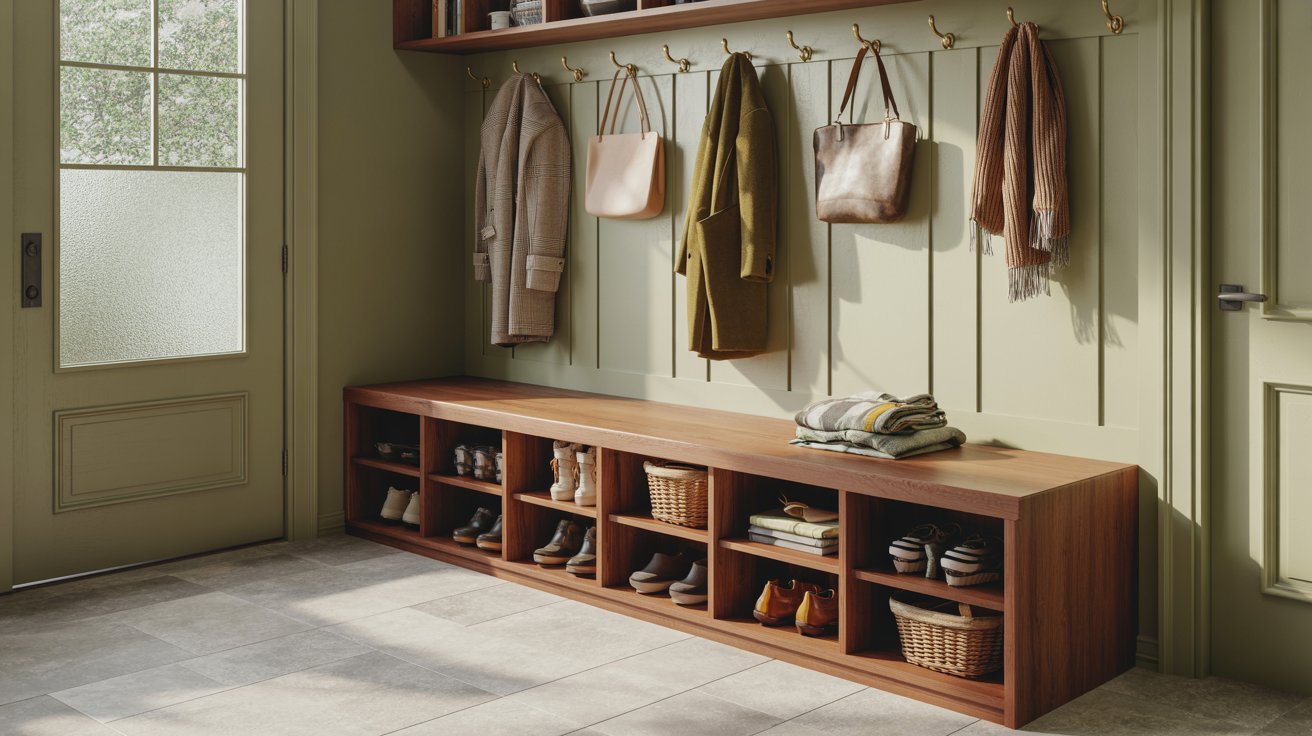
A built-in bench gives you a place to sit while putting on shoes and hidden storage underneath. Lift-top designs are especially useful for umbrellas, extra shoes, and seasonal gear.
This works well in a proper mudroom or a wider hallway. It keeps the space looking clean while doing a lot of work behind the scenes.
It's one of the most practical investments you can make for an entry area.
2. Wall Hooks for Everyday Needs
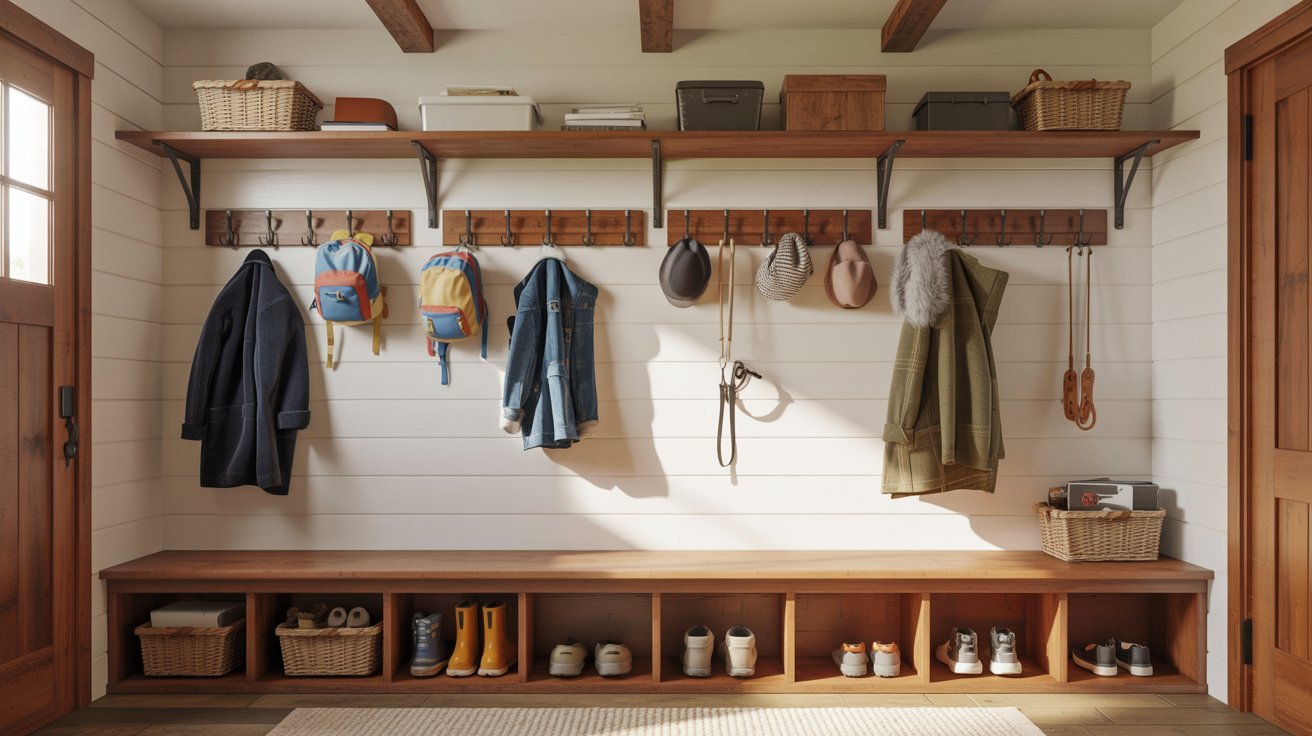
Hooks are simple, affordable, and incredibly effective. A row of sturdy wall hooks gives coats, backpacks, hats, and dog leashes a dedicated spot off the floor.
Mount them at different heights. Lower hooks for kids, higher ones for adults. It sounds obvious but it makes a real difference in how often people actually use them.
Even a single row of hooks on a bare wall can turn a chaotic entry into a functional one.
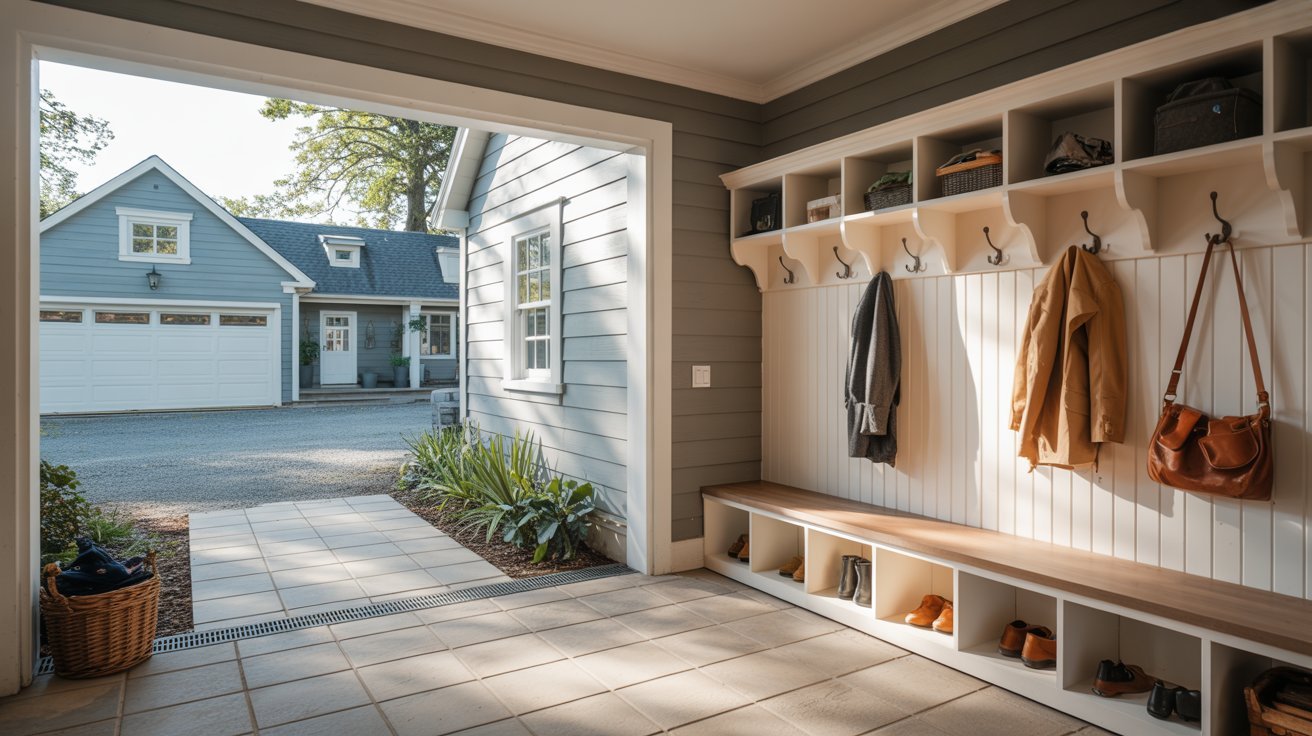
3. Floating Shelves Above the Bench
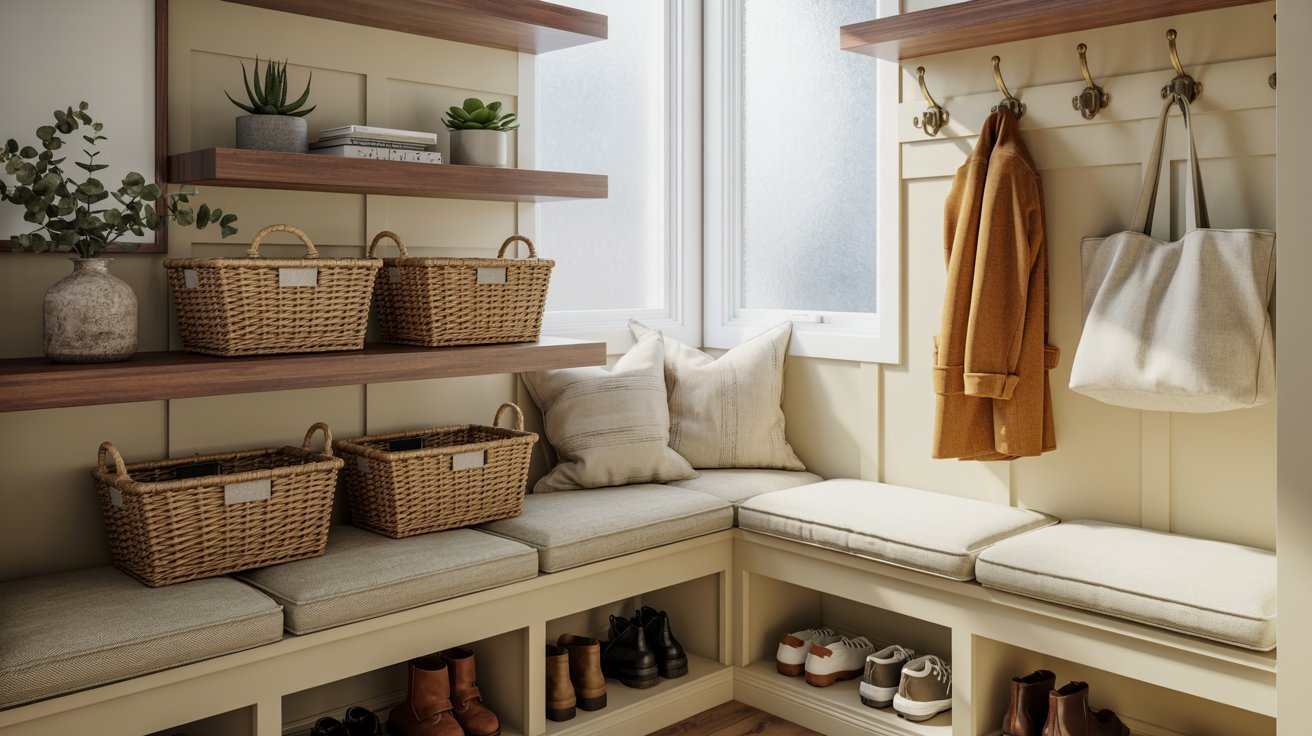
Floating shelves above a bench add vertical storage without taking up floor space. Use baskets with labels to sort items by person or category.
The shelves also add visual interest to the wall. A mix of storage and small decorative touches makes the space feel designed rather than thrown together.
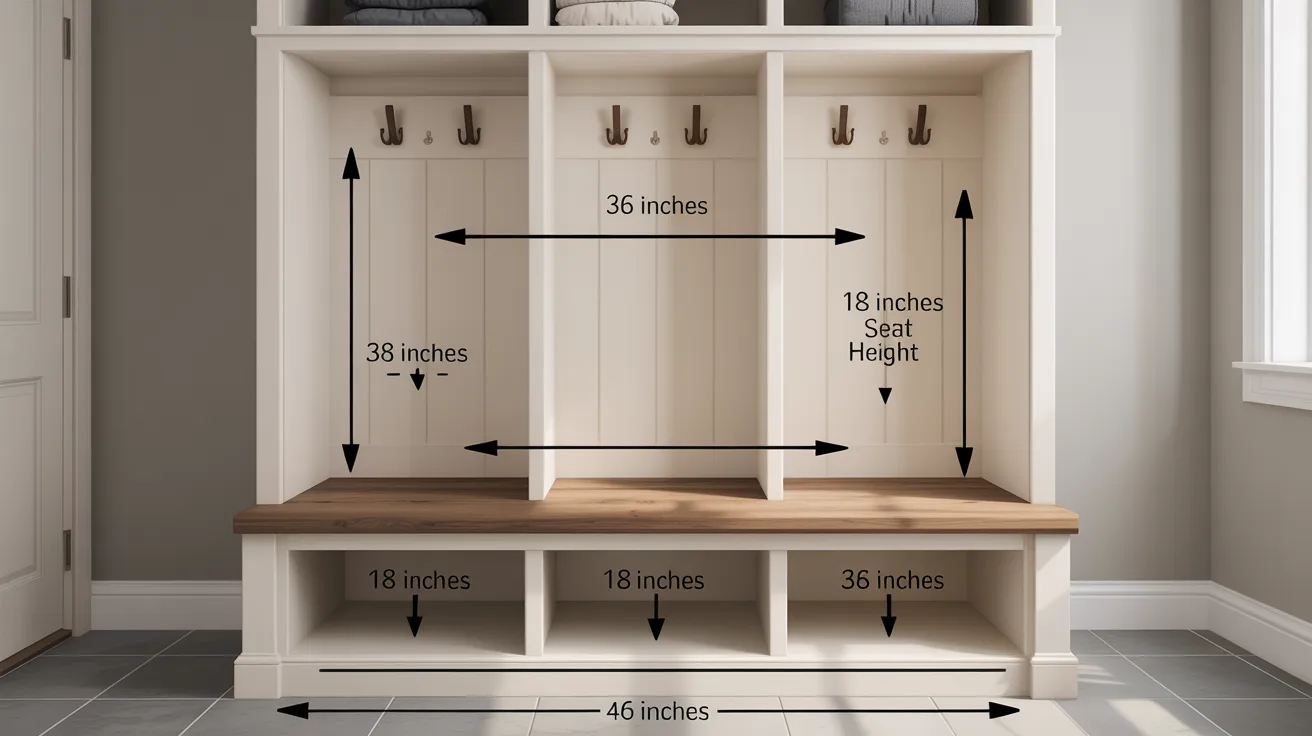
4. Cubbies for Family Organization
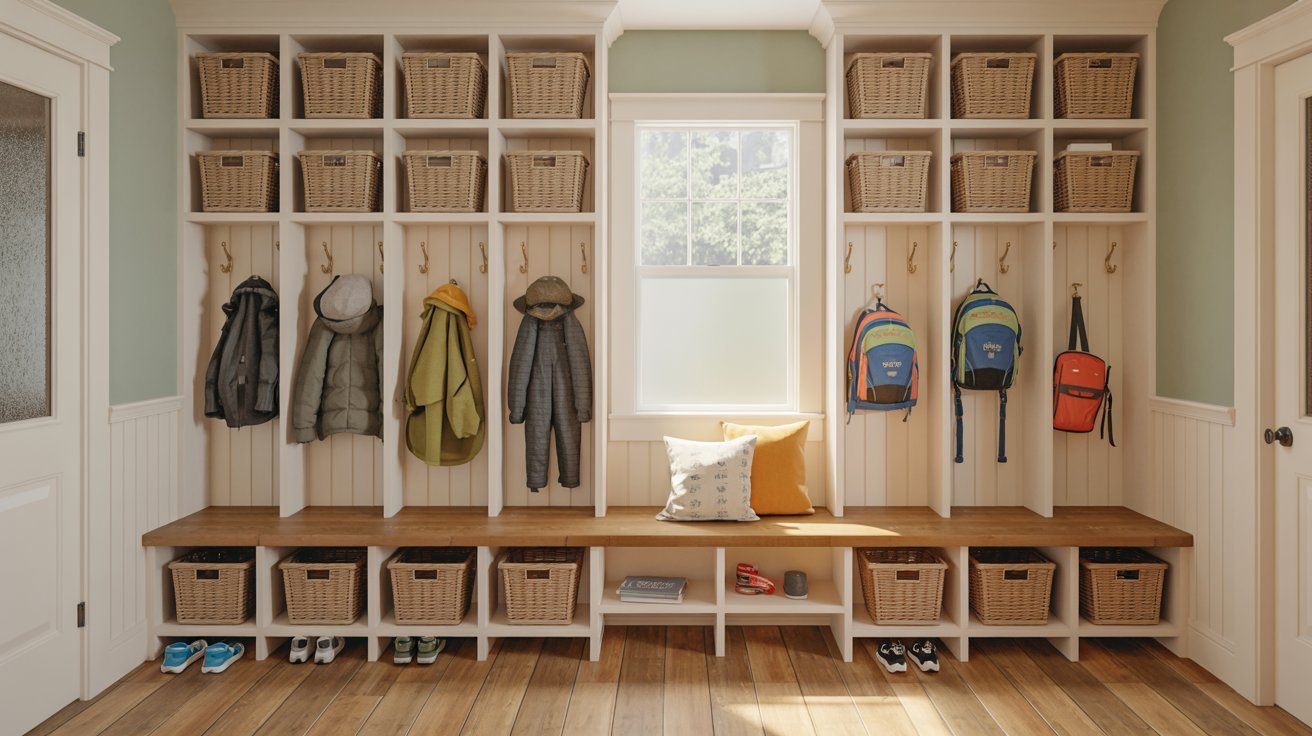
Cubbies make shared storage personal. Each family member gets their own section, which means no more digging through everyone's stuff to find your own.
Label each cubby with a name or use a different basket color per person. You can go open for easy access or add doors to hide the clutter.
Cubbies bring real order to a mudroom drop zone that serves more than one or two people.
5. Farmhouse-Style Mudroom Drop Zone
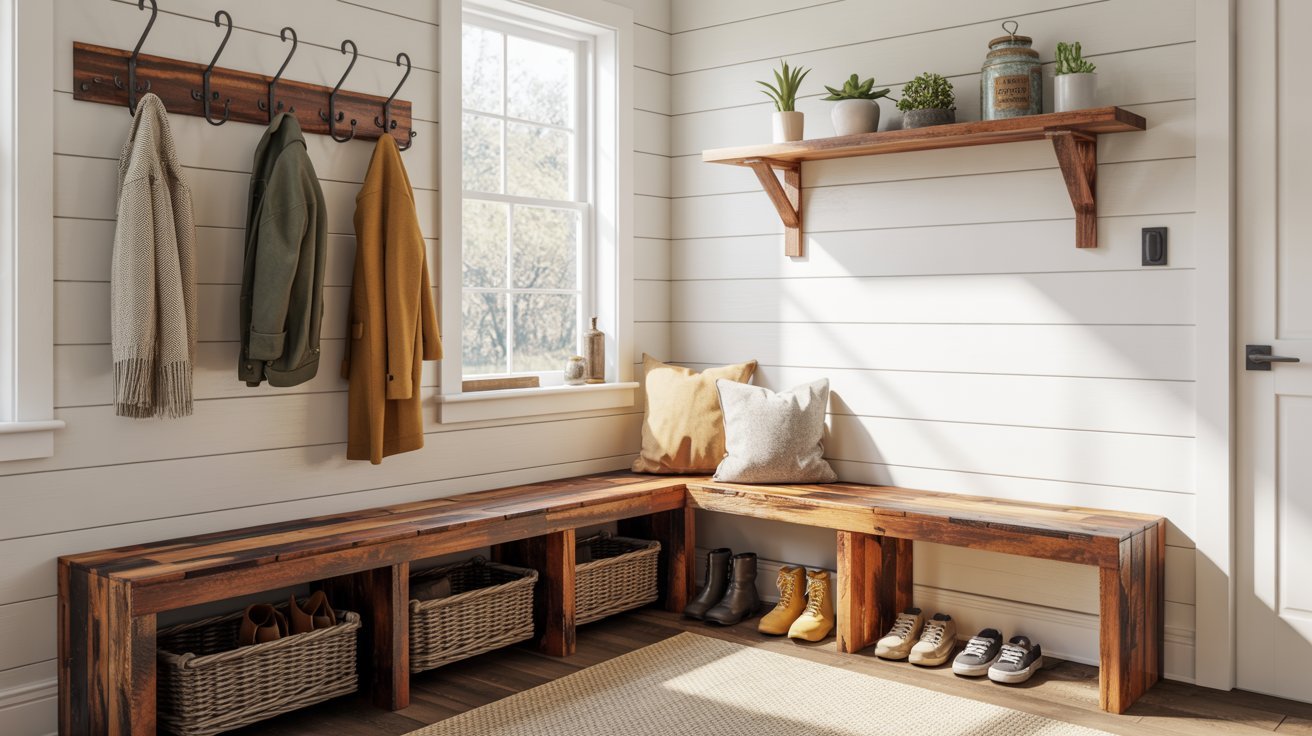
Shiplap walls, rustic wood accents, and woven baskets create a farmhouse drop zone that's warm and full of character. Reclaimed wood bench tops and wooden shelf brackets add natural texture.
Finish with black iron hooks and hardware. That contrast between light wood and matte black gives the whole setup a sharp, finished look.
6. Modern Minimalist Entryway Setup
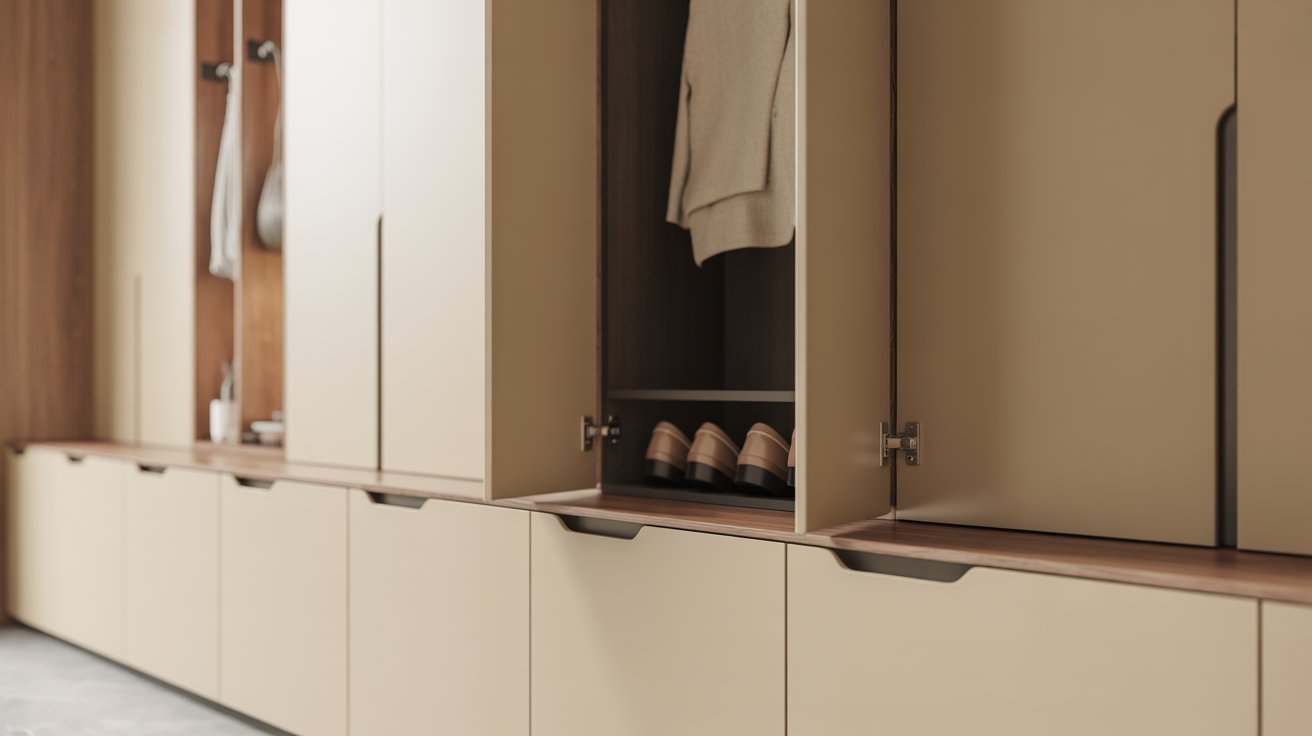
Neutral tones, smooth cabinet fronts, and nothing on display that doesn't need to be there. Sleek cabinetry with push-to-open doors hides everything from view.
Stick to two or three colors. White walls, light wood accents, and matte black fixtures work well without competing for attention.
7. Small Mudroom Drop Zone Ideas for Tight Spaces
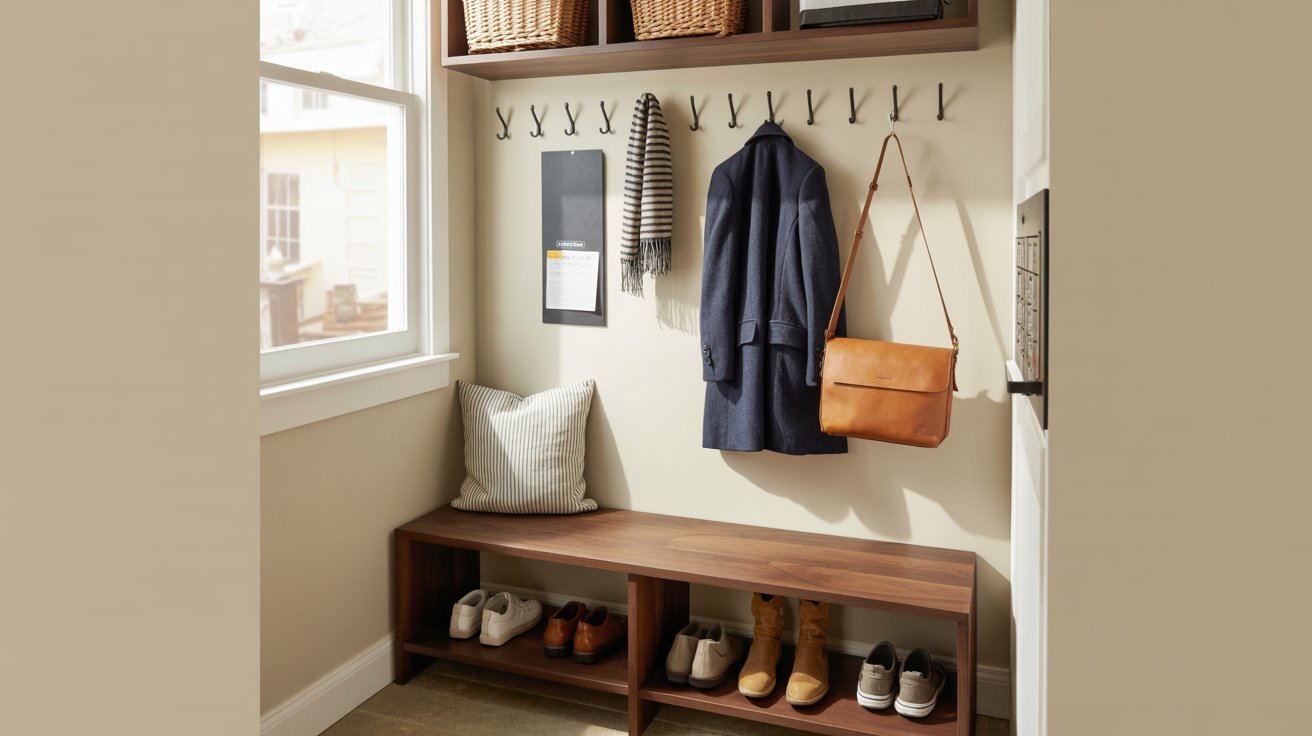
A slim bench takes up minimal floor space but still gives you a surface and a seat. Pair it with vertical hooks above and you've covered the basics.
Going vertical is everything in a tight space. Even a small, well-organized mudroom drop zone beats a wide, cluttered hallway every time.
8. Mudroom Lockers for Large Families
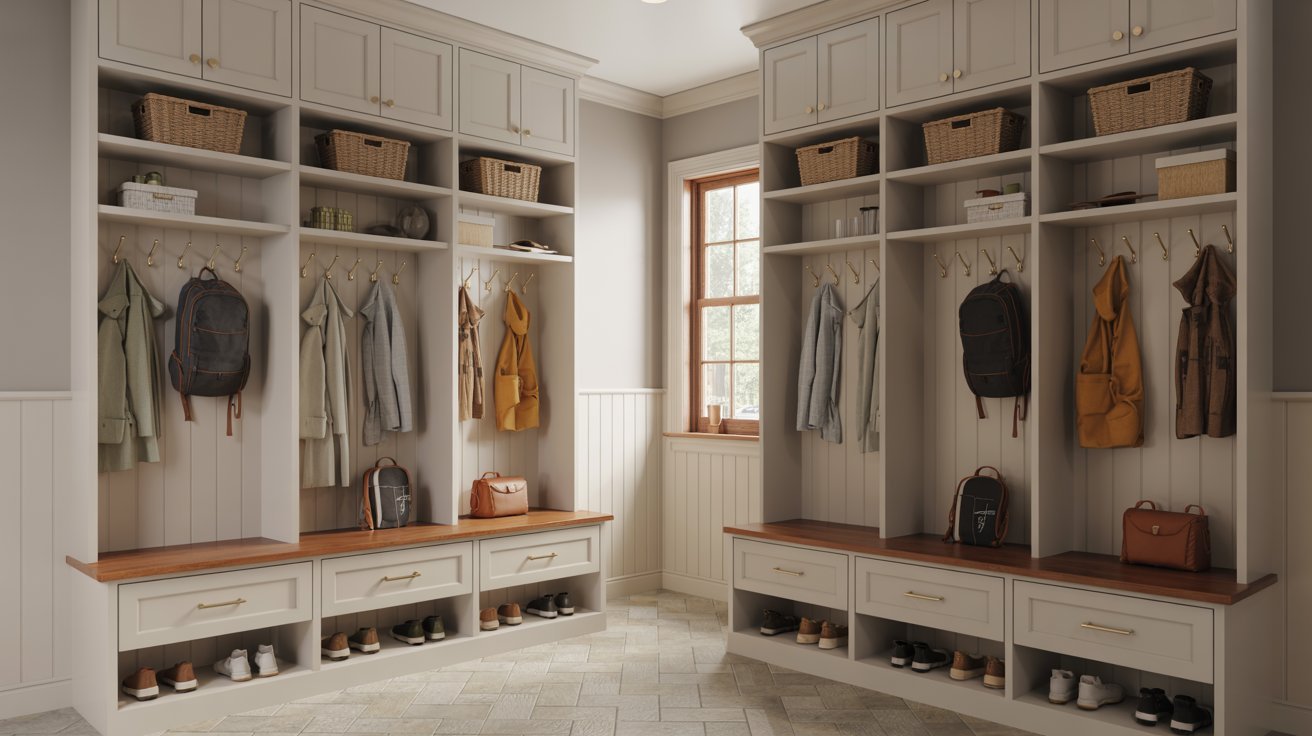
clean functional entryway design."
Lockers give each person their own contained space from top to bottom. Think full-height sections with a hook, a shelf, and a lower cubby or drawer per person.
Add doors for a cleaner look, especially if the mudroom is visible from the main living area. When everyone has their own locker, things actually stay where they belong.
9. Open Shelf Drop Zone Design
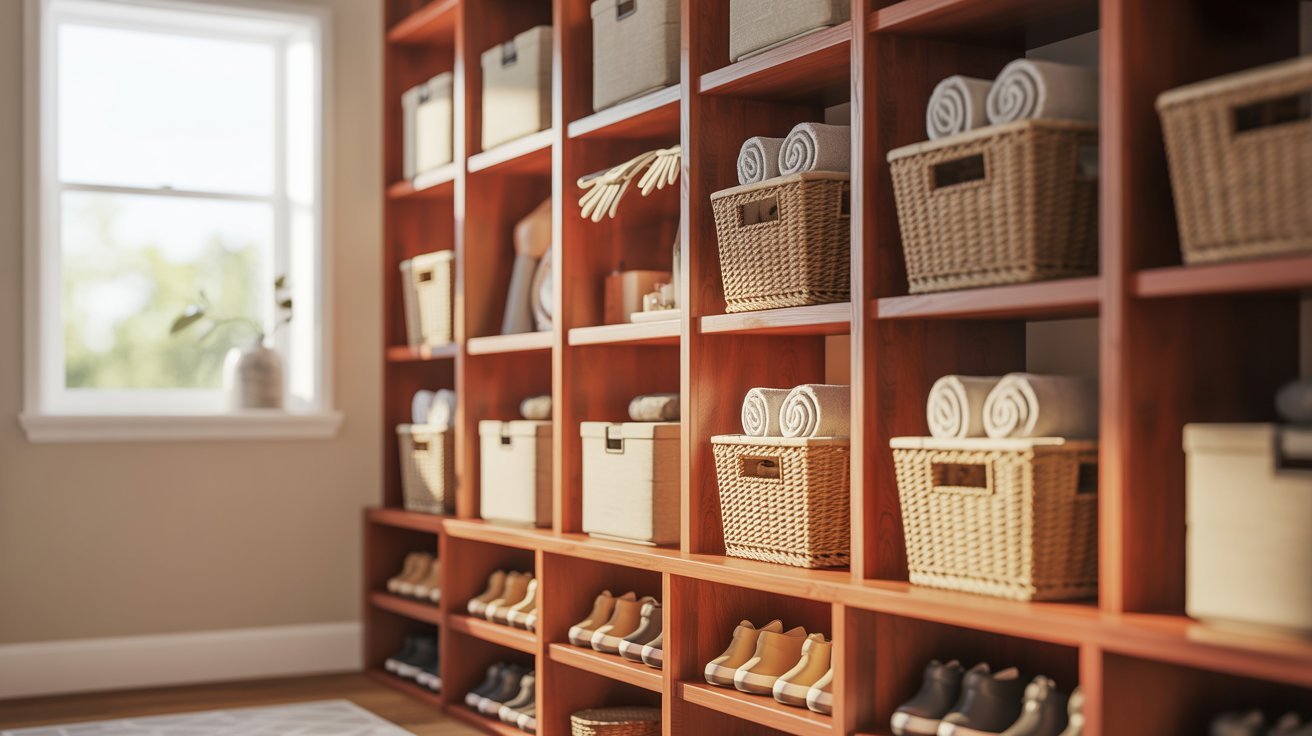
Open shelving keeps things accessible and the space feeling light. Use matching bins or baskets to keep shelves from looking chaotic.
This works well in smaller homes where closed cabinetry can feel heavy. It also makes it easier for kids to put things away on their own.
10. Mudroom Drop Zone With Charging Station
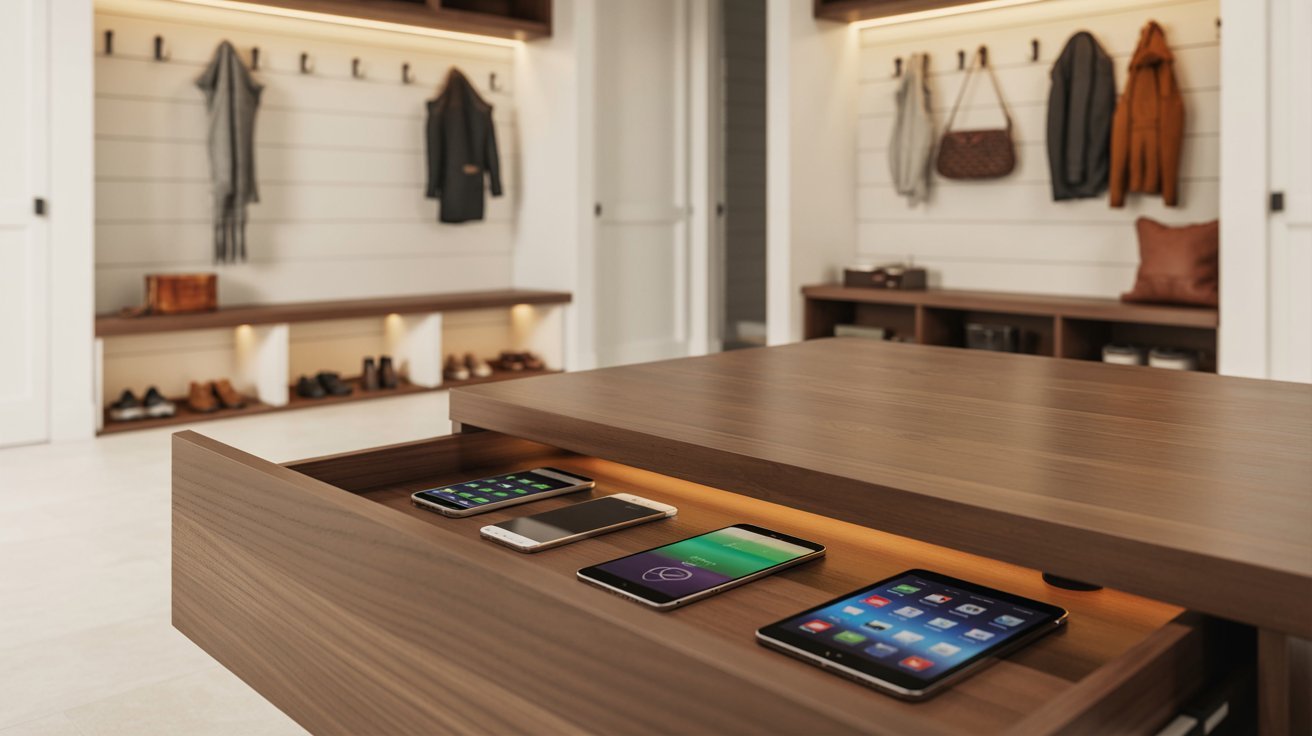
A built-in charging drawer or cabinet with a hidden outlet keeps devices charged and out of sight. Some setups include a small tray just for phones so everyone knows where to leave them.
It's a small addition that genuinely changes how mornings flow.
11. Laundry Room Mudroom Combo
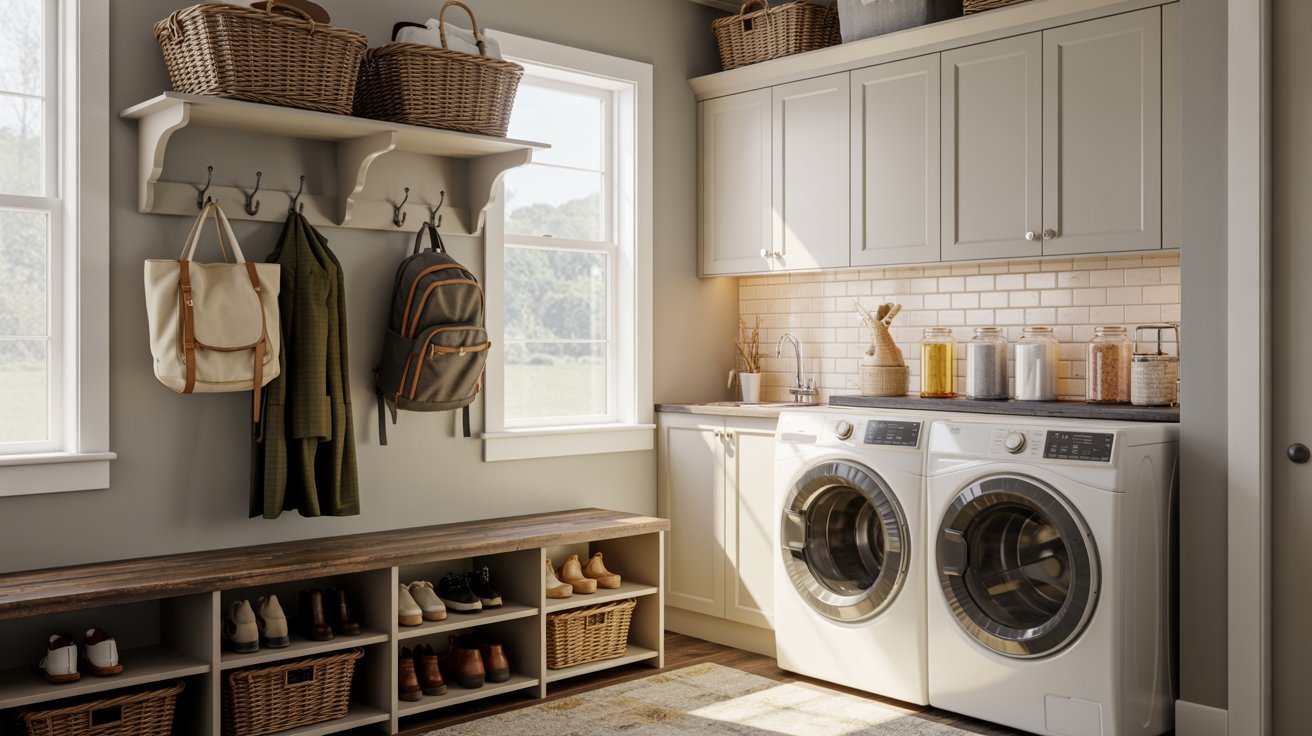
If your laundry room sits near the back door, combining it with a drop zone saves space and adds function. Add hooks and a bench near the washer and dryer so dirty clothes go straight to the source.
Use upper cabinets to store cleaning supplies alongside bags and seasonal items.
12. Entryway Cabinet Storage Wall
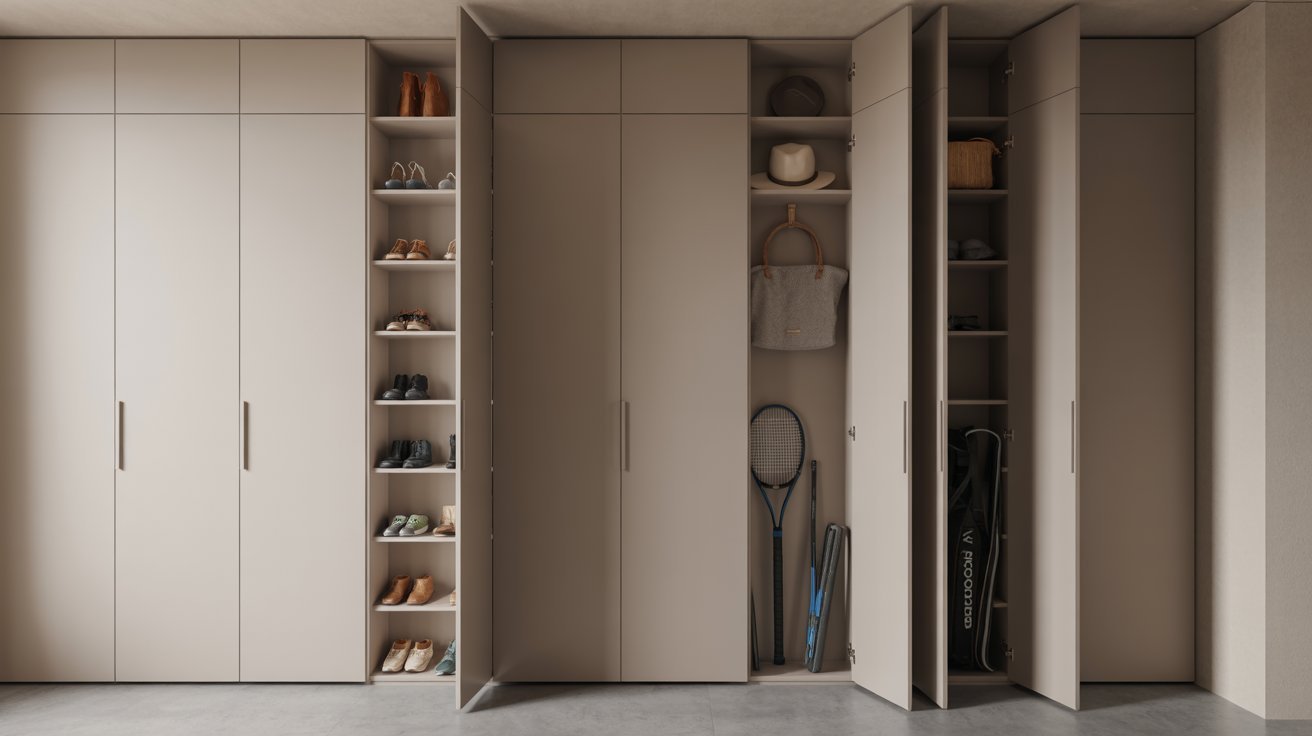
A floor-to-ceiling cabinet wall turns your entryway into a serious storage solution. Upper cabinets handle bags and hats while lower ones take shoes and sports gear.
Paint everything the same color and it reads as one cohesive, built-in piece.
13. Black and White Mudroom Design
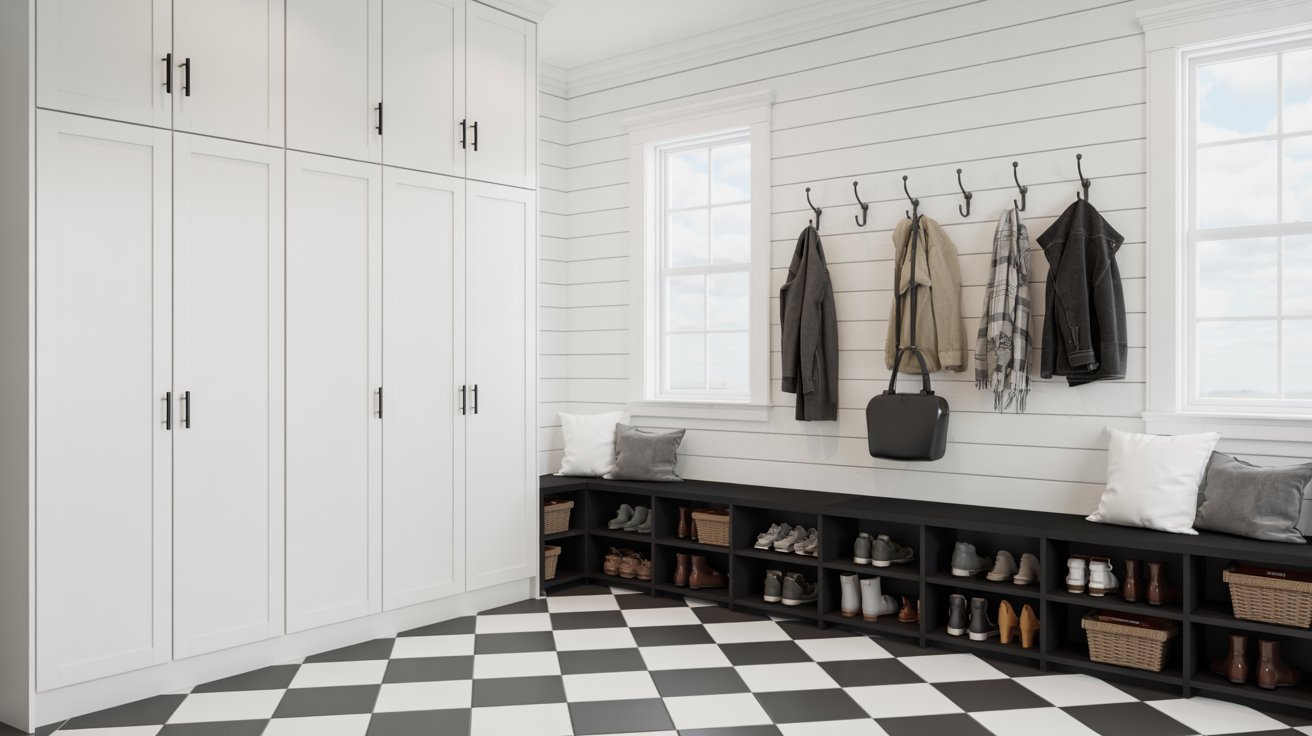
Black and white creates a sharp, high-contrast look that never goes out of style. White shiplap walls with black cabinetry, hooks, and hardware give the space a clean, graphic feel.
Black and white tile flooring ties the whole look together. Hexagon or checkerboard patterns add visual interest underfoot.
14. Mudroom Drop Zone With Wallpaper Accent
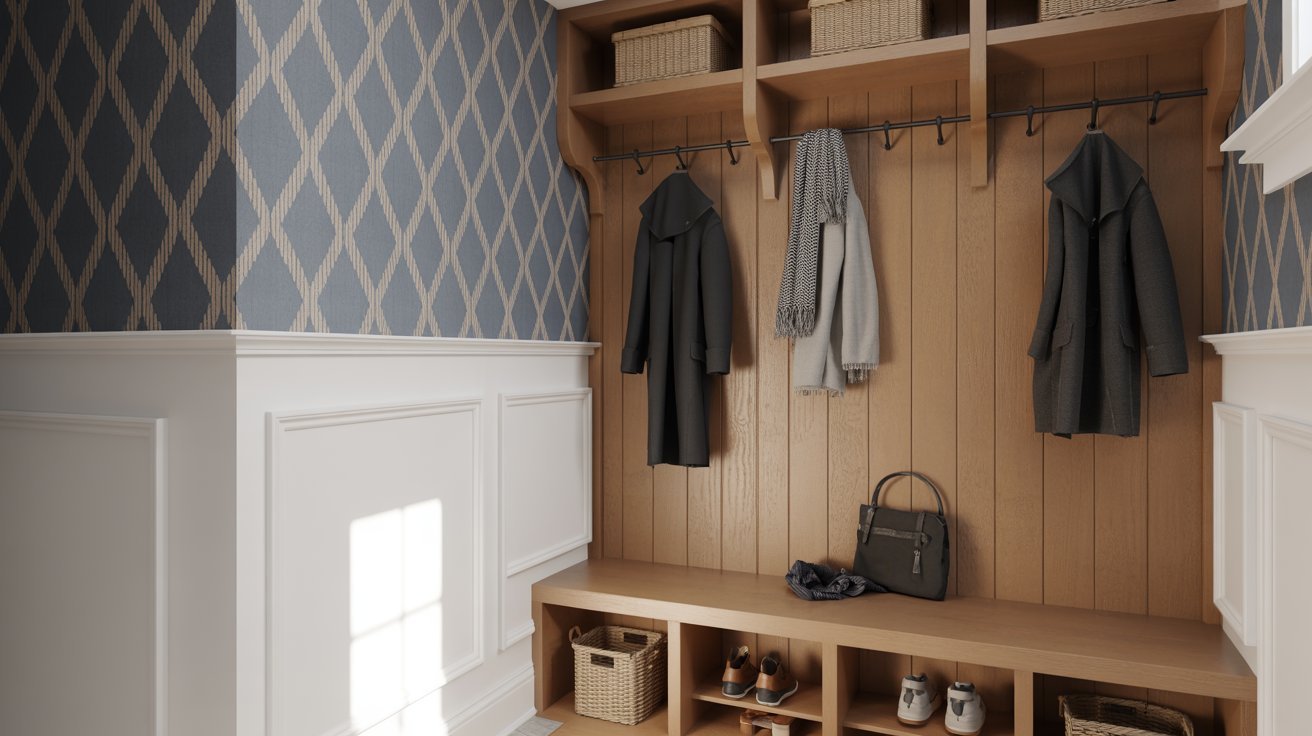
A bold pattern or textured wallpaper on one wall adds personality to a space that can easily feel plain. Keep the rest of the setup simple so the wallpaper gets to be the focal point.
Clean white trim and natural wood accents let it breathe.
15. Pet-Friendly Mudroom Setup
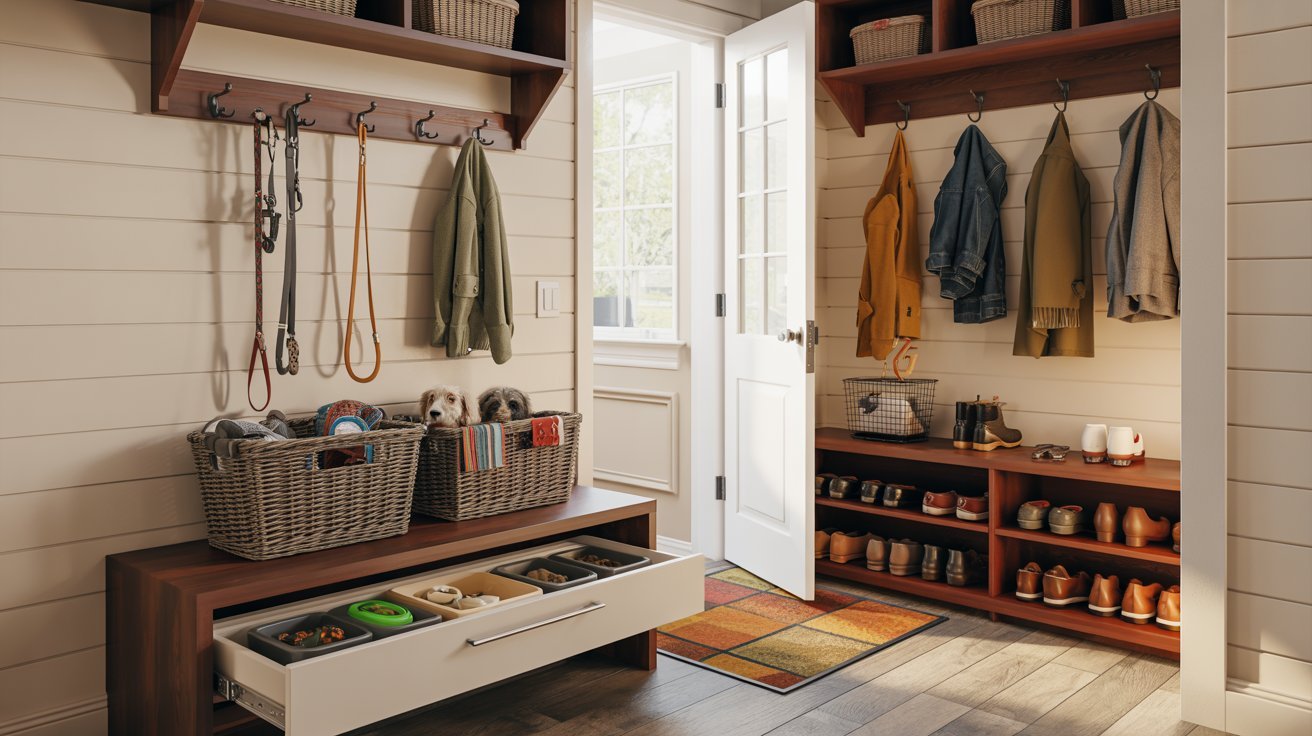
Add a low hook for leashes, a bin for waste bags, and a pull-out drawer for pet food. A washable mat near the door makes cleaning up paw prints fast.
When you plan for your pets, the drop zone works better for everyone in the house.
16. Scandinavian-Inspired Mudroom
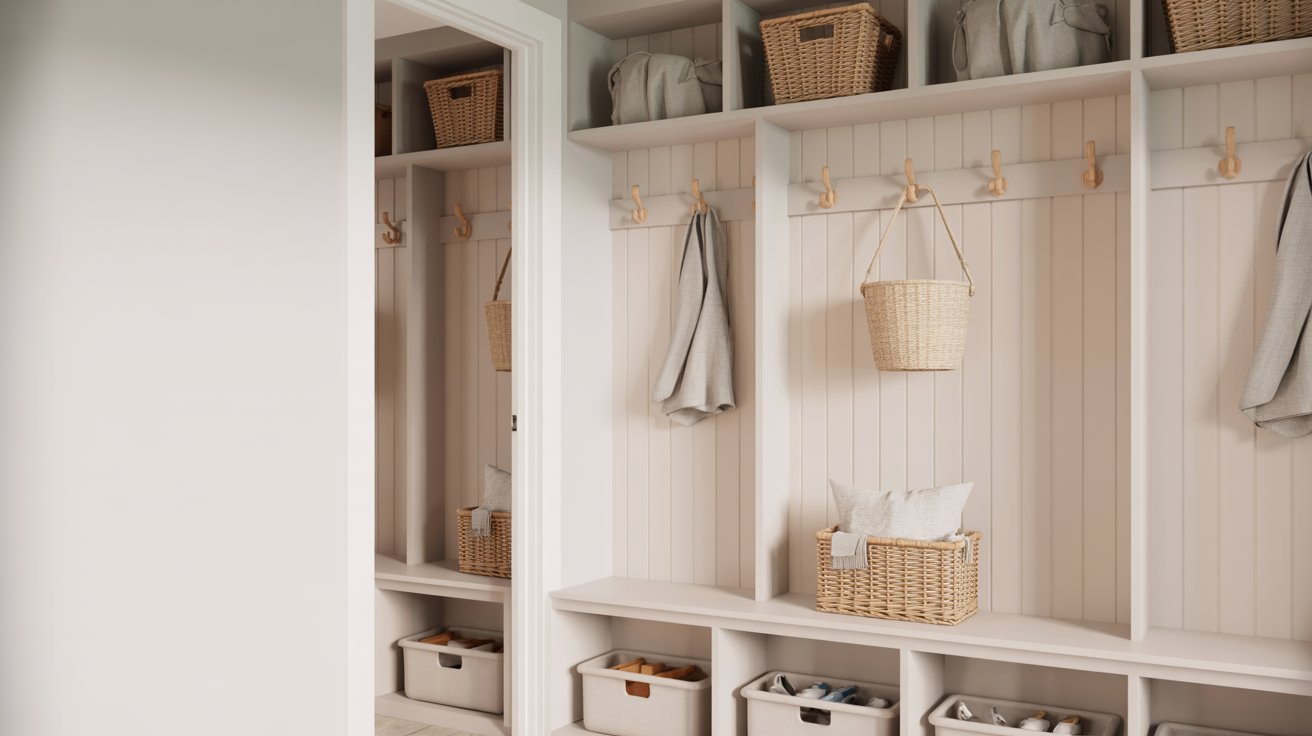
Light wood tones, white walls, and soft neutral accents create a space that feels open and calm. Simple wooden pegs, woven baskets, and linen bins add texture without visual weight.
This style works especially well in smaller homes because it keeps the entry feeling spacious.
17. Mudroom Drop Zone With Shoe Drawers
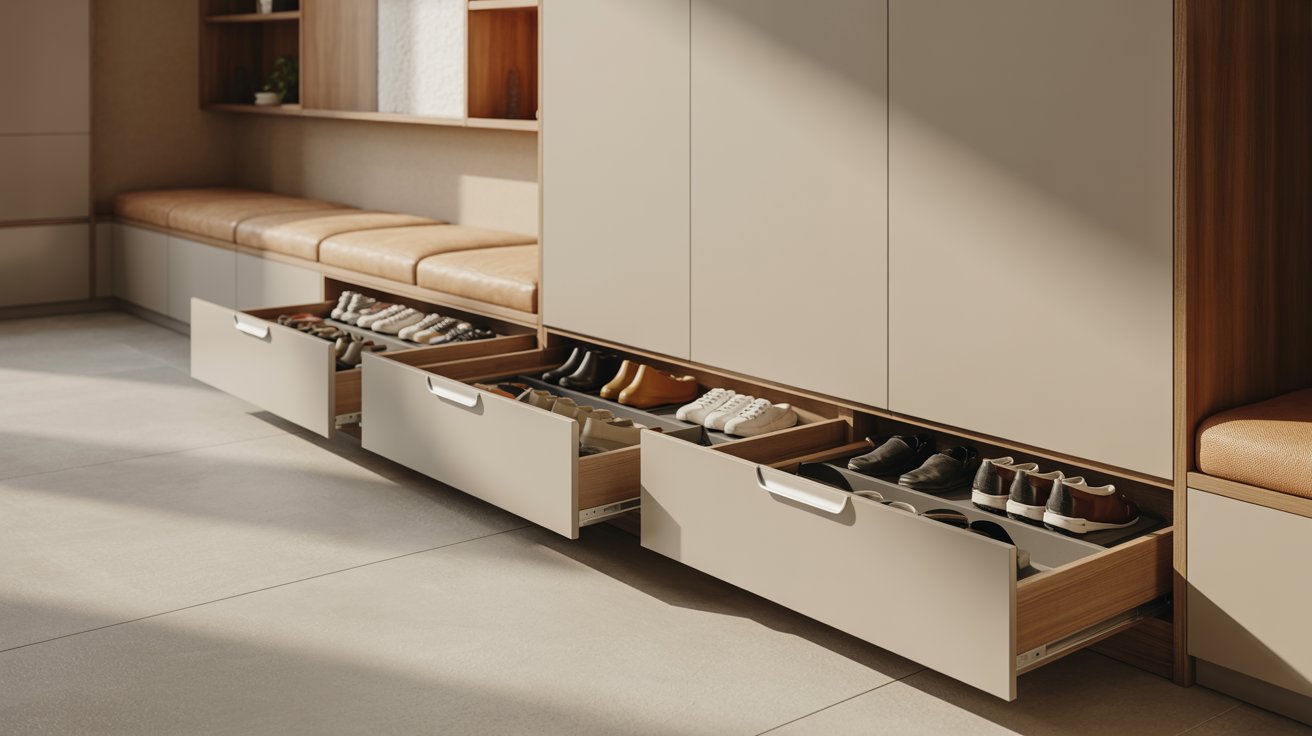
Pull-out drawers at bench height keep footwear out of sight and the floor completely clear. Angled shoe drawers are another option, tilting forward so you can see every pair at once.
A mudroom drop zone with built-in shoe storage makes it much easier to find the right pair quickly.
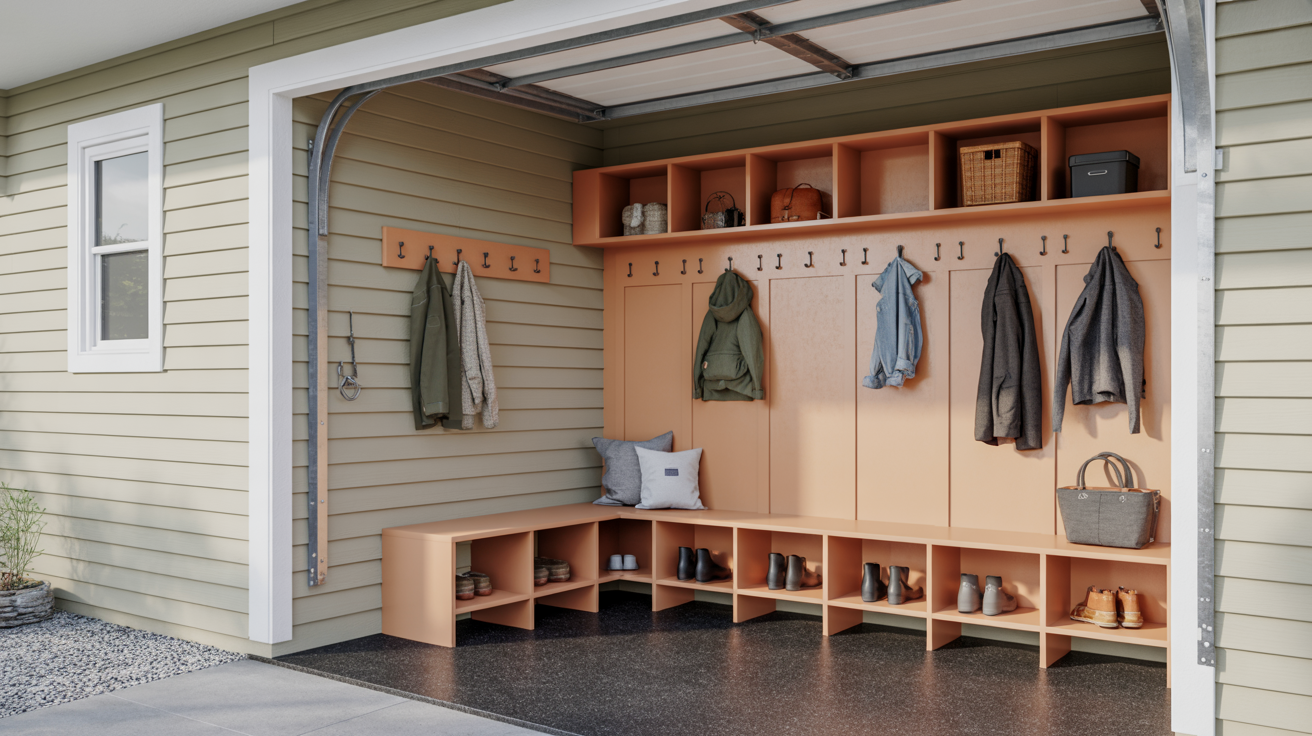
18. Budget-Friendly DIY Mudroom Ideas
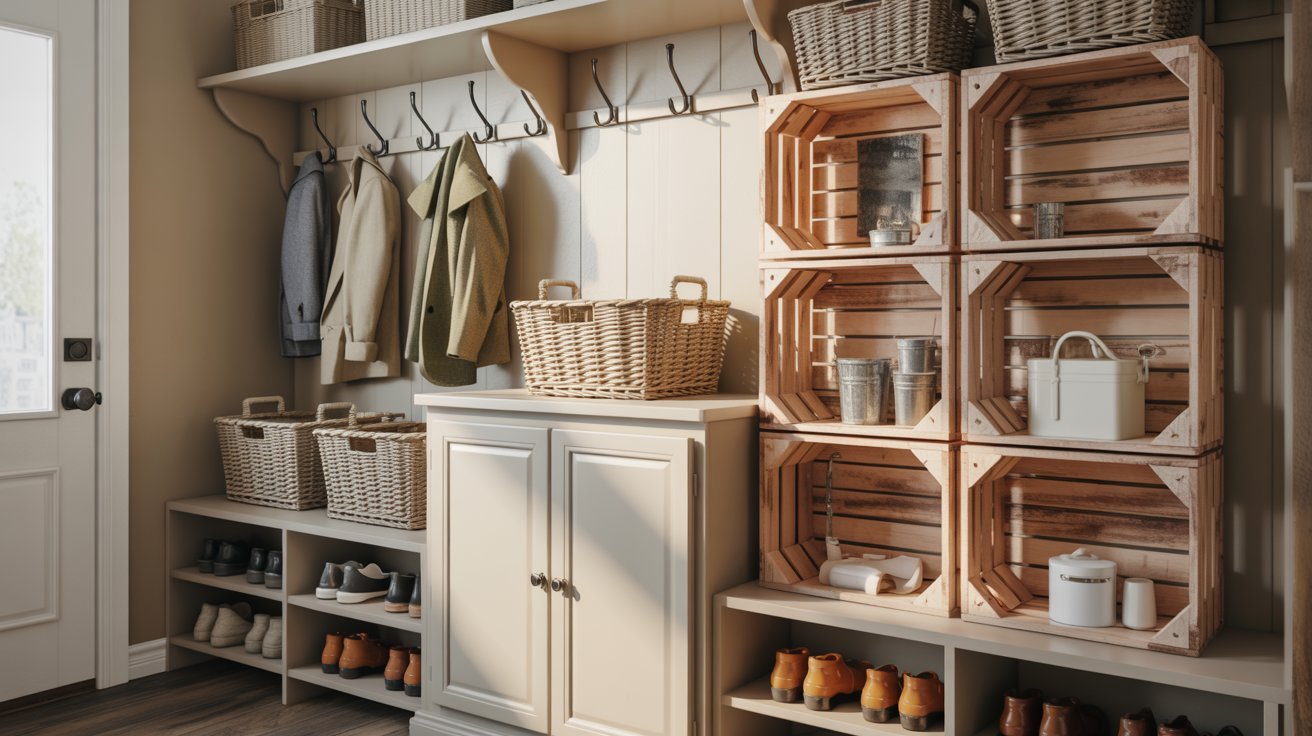
cubbies in a simple organized entryway."
A simple cabinet with hooks mounted above covers the basics for very little money. Add labeled baskets and you have a working system.
Repurposed wooden crates stacked on their sides make great open cubbies. A coat of paint and some handles dress them up quickly.
19. Luxury Custom Mudroom Design
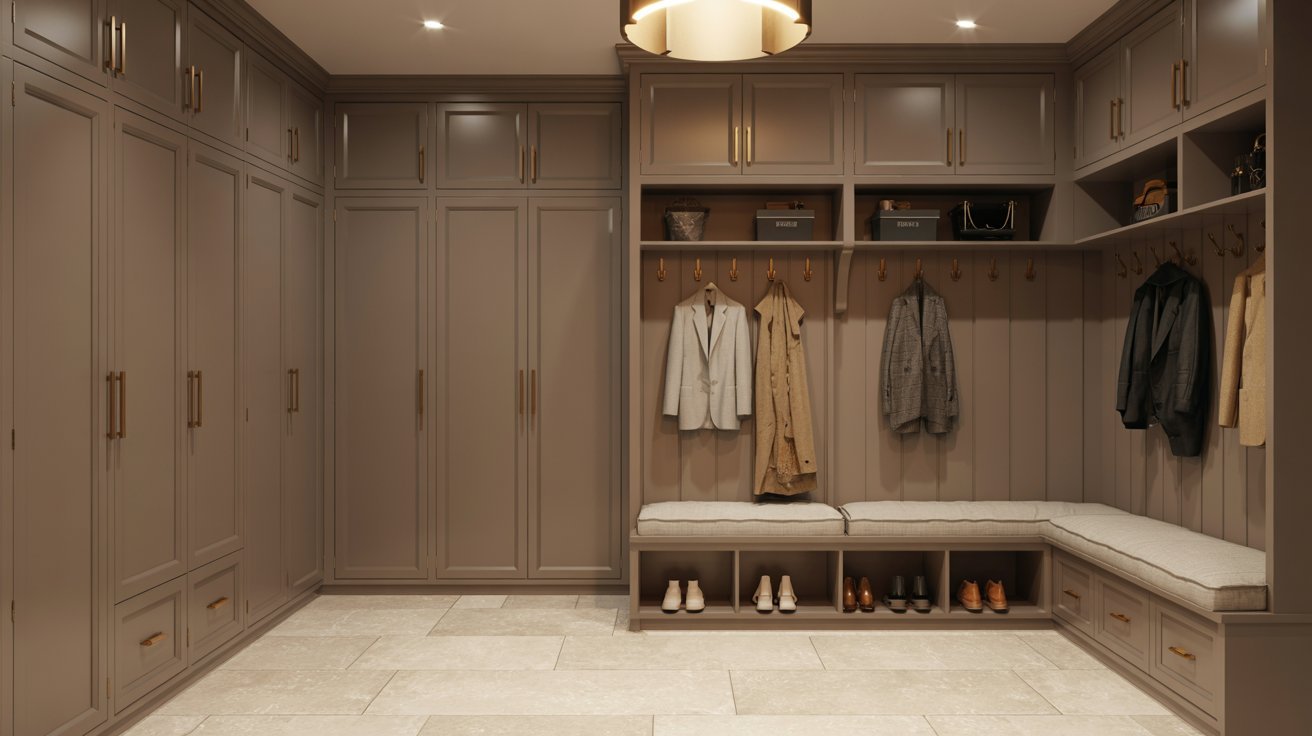
Custom cabinetry, stone flooring, designer lighting, and brass hardware bring the whole room together. Everything is built for your space and exactly how you live.
A well-designed luxury mudroom looks like a feature, not just a utility space, and genuinely impresses buyers.
Mudroom Drop Zone Decor Tips That Make the Space Look Expensive
You don't need to spend a lot to make a drop zone look professionally designed. A few consistent choices go a long way.
- Use matching storage containers: Uniform baskets or bins make open storage look intentional
- Add a mirror: It serves a practical purpose and makes the space feel larger
- Layer your lighting: An overhead light plus a wall sconce adds warmth and depth
- Bring in a plant: A small potted plant adds life to a utilitarian space
- Choose a statement mat: A textured or patterned doormat sets the tone at the door
- Keep hardware consistent: Matching hook finishes, cabinet pulls, and light fixtures tie everything together
- Paint the ceiling: A soft ceiling color adds an unexpected detail that looks custom
Small choices made consistently are what separate a basic drop zone from one that looks considered and well put together.
Conclusion
Here's what I know for sure. A well-planned mudroom drop zone is one of those changes that makes you wonder how you ever managed without it.
You don't need to overhaul your whole home. Pick one idea from this list that fits your space and just go for it.
The hardest part is starting. After that, it gets easy.
So tell me, which setup are you planning to try? Drop it in the comments below. And if you found this helpful, share it with someone whose entryway could use a little rescue.
Frequently Asked Questions
What Should Be Included in a Mudroom Drop Zone?
A well-planned drop zone needs hooks, a storage bench, cubbies or shelves, and dedicated shoe storage at minimum. Adding a key tray and a charging spot makes it even more functional.
How Do You Organize a Small Mudroom Drop Zone?
Go vertical with wall hooks and floating shelves to maximize a tight space without crowding the floor. Multifunctional furniture like a bench with hidden storage does double duty in compact layouts.
What Is the Best Flooring for a Mudroom?
Tile, vinyl plank, and waterproof laminate handle moisture, dirt, and heavy foot traffic well. Avoid carpet in this area since it holds onto mud and odors.
How Much Space Do You Need for a Mudroom Drop Zone?
Even a narrow 3-foot wall section can work as a compact drop zone with the right storage pieces. A full mudroom typically needs at least 6 to 8 feet of wall space to include seating, storage, and hooks comfortably.
Are Mudroom Drop Zones Worth It?
A dedicated drop zone reduces daily clutter, saves time during busy mornings, and keeps the rest of your home tidier. It also adds functional appeal that buyers notice when a home goes on the market.