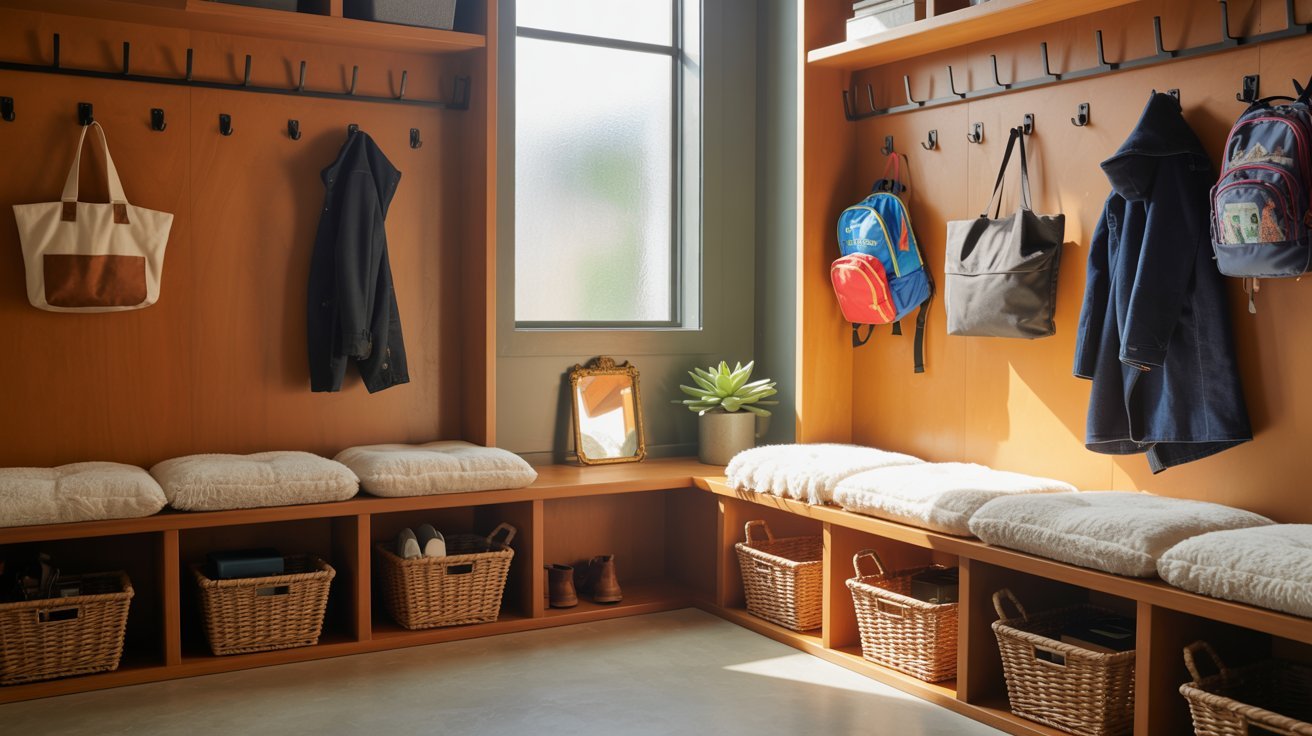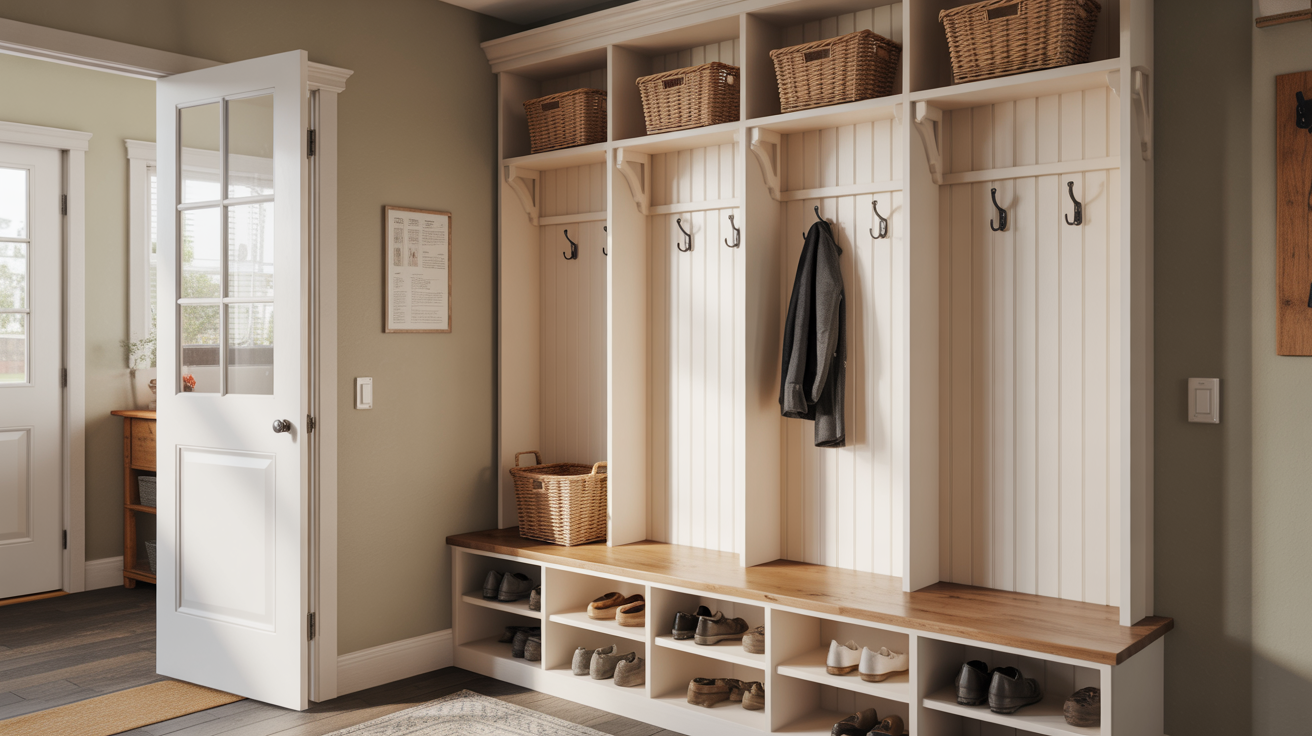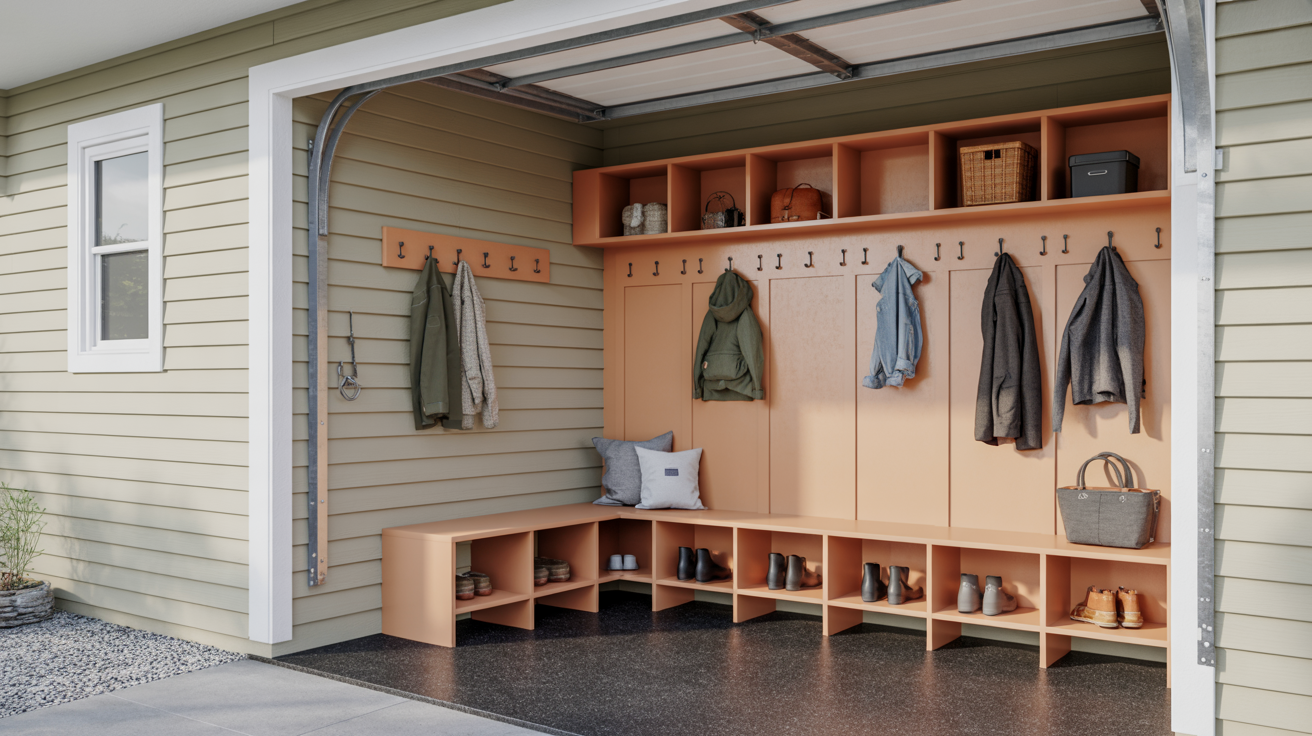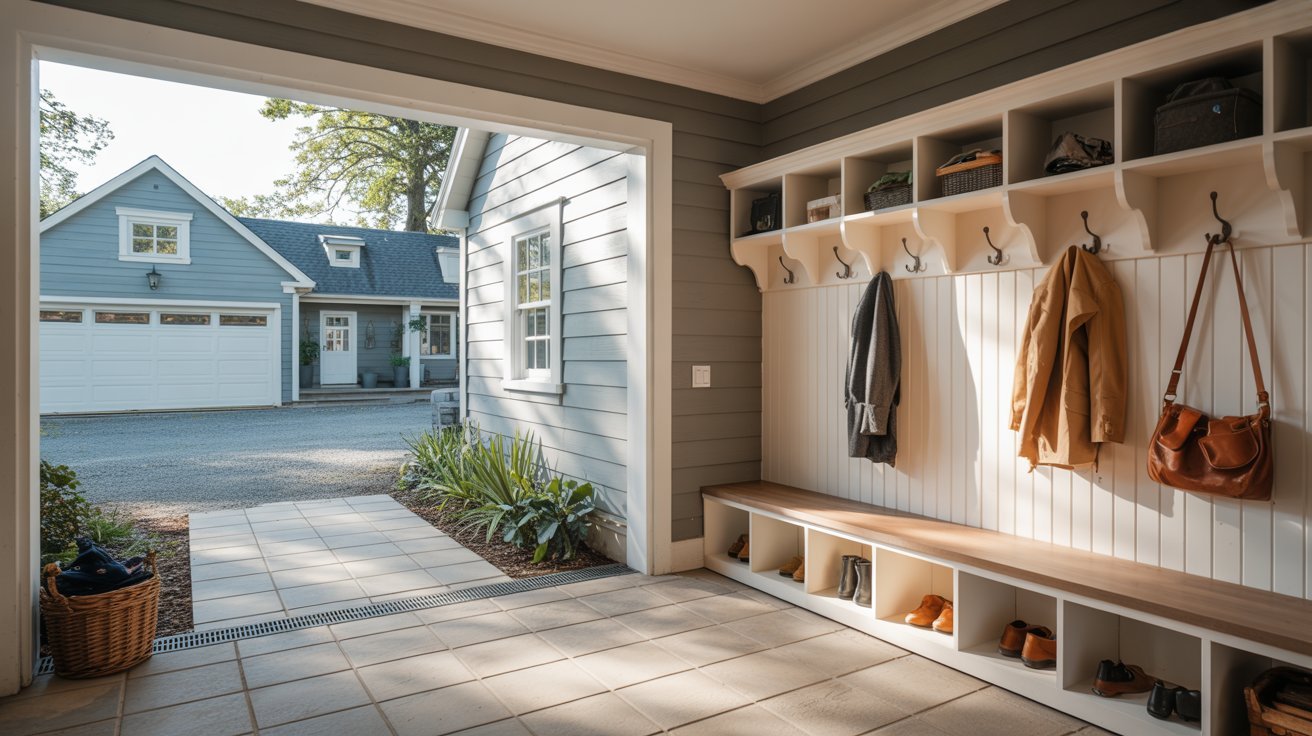
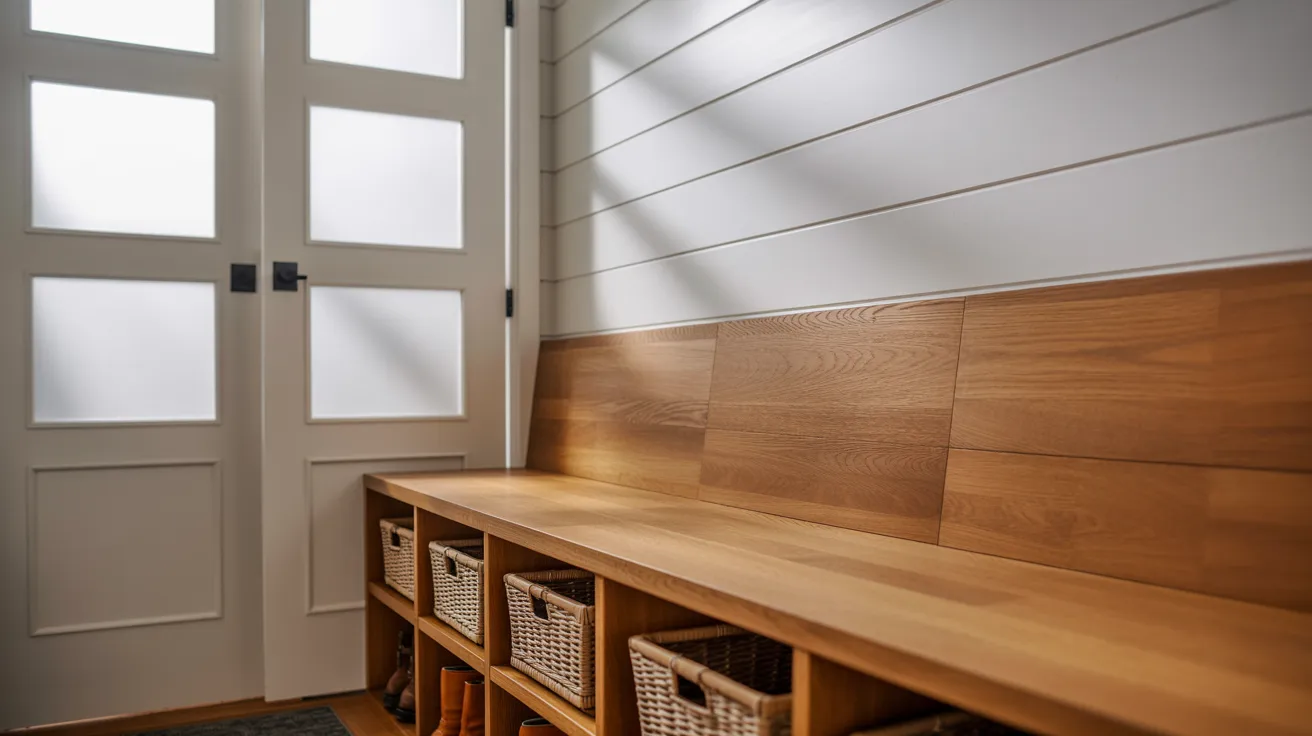

Getting mudroom bench depth wrong is one of the most common DIY mistakes.
I've seen it happen a lot, and I've made the same error myself early on. Too deep, and you waste space. Too shallow, and it's uncomfortable to sit on.
With years of hands-on building experience, I'll help you plan smarter before you cut a single board.
This article covers standard depth measurements, how to pick the right depth for your home, storage design tips, and common mistakes to skip.
I'll keep it simple, practical, and straight to the point so you can build with confidence from day one.
Understanding Standard Mudroom Bench Depth Measurements
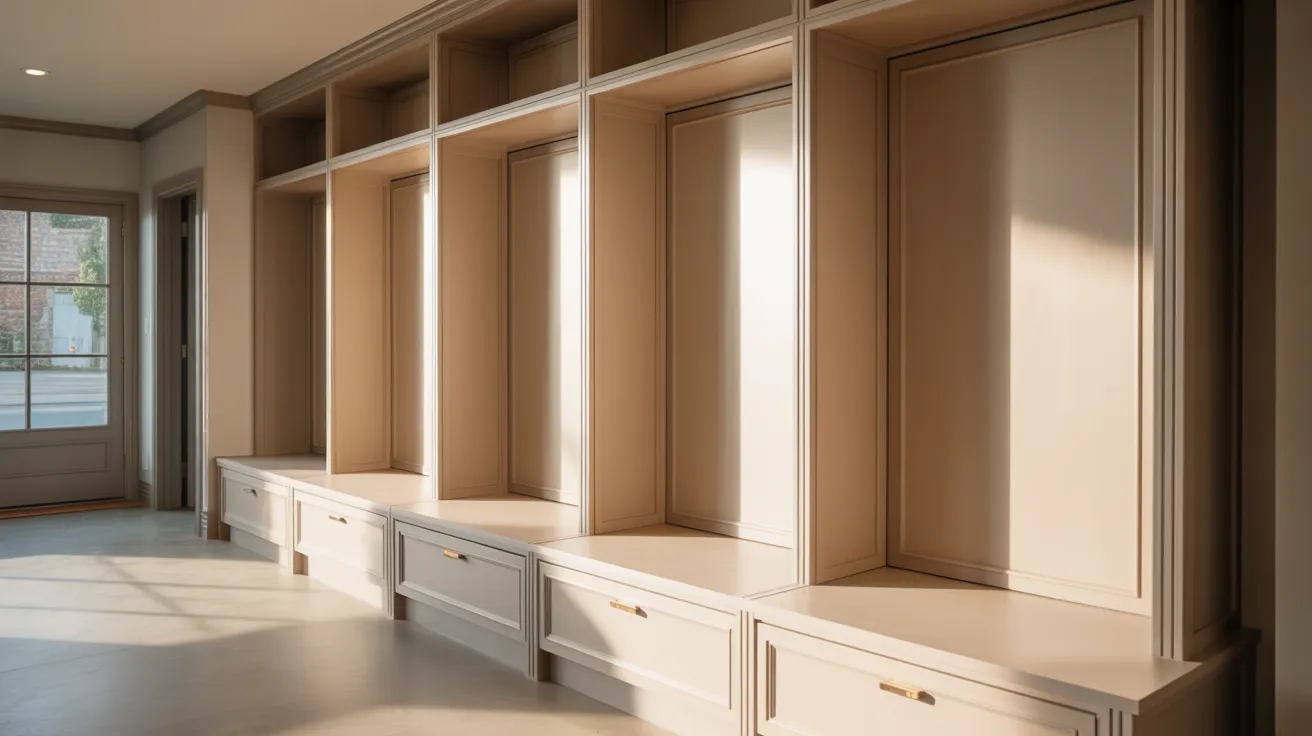
Bench depth is not one-size-fits-all, but there are proven ranges that work for most homes.
14-16 inches works well for compact mudrooms, saving floor space while still giving you a spot to sit and put on shoes.
18 inches is the most recommended depth because it hits the sweet spot. It feels comfortable for sitting, fits most storage bins underneath, and does not eat up the walkway room.
That is why builders keep coming back to this number. 20-23 inches suits larger mudrooms with heavy storage needs, making it a great fit for families with kids, sports gear, or pets.
Things to Consider Before Choosing Mudroom Bench Depth
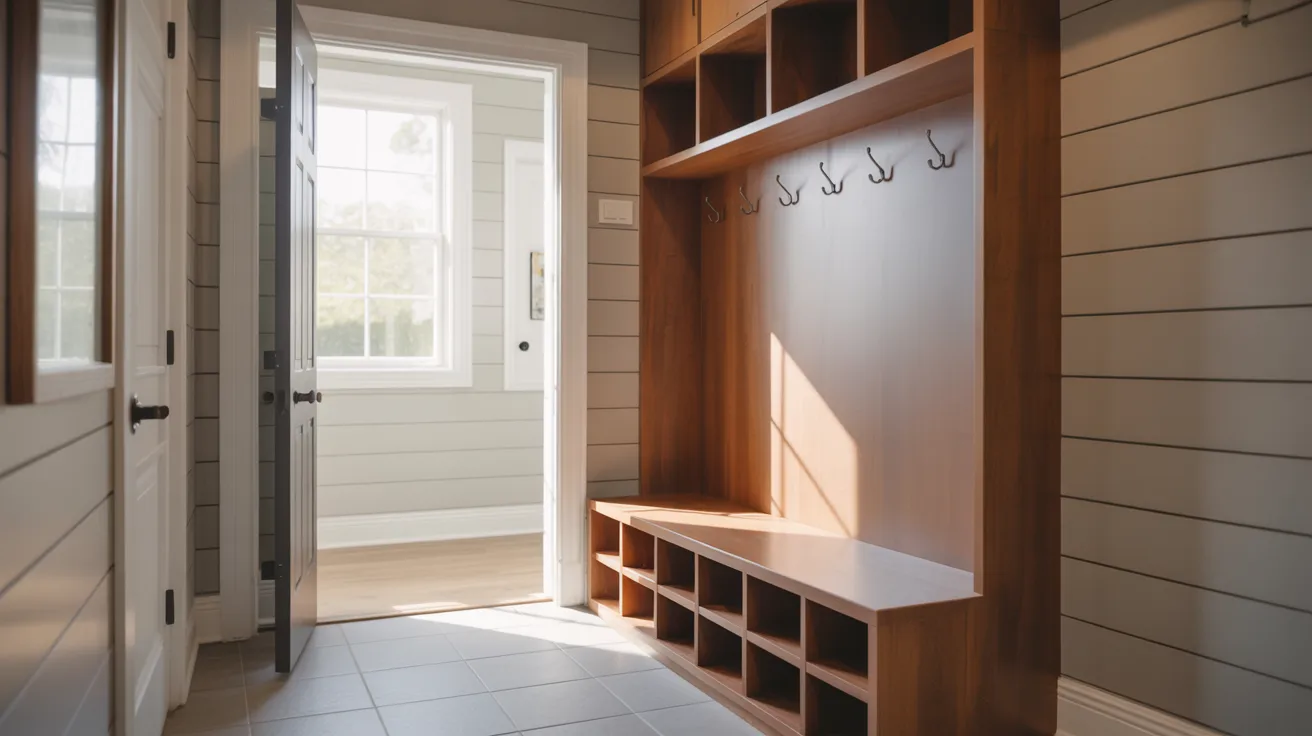
A few key factors can make or break your bench design before you even start building.
Available Space and Layout Constraints
Measure your mudroom wall to wall before you plan anything else. A tight space will always call for a slimmer bench to keep things open.
A wide entry gives you more flexibility and more room to work with.
Traffic Flow and Door Clearance
Your bench should never block a door swing or make the walkway feel narrow. Always keep at least 36 inches of clear walking space in front of the bench.
This one small step saves a lot of frustration every single day.
Storage Needs vs Seating Comfort
More depth gives you more storage space below the bench. But it can also mean less legroom when you sit down to put on shoes.
Think about what matters more in your daily routine and let that guide your depth choice.
Household Usage
A family with three kids and a dog needs a very different bench than a single adult. Think about who uses the mudroom, how often they use it, and what they bring in each day.
Your bench should fit your real life, not just look good on paper.
How to Choose the Right Depth for Your DIY Mudroom Bench
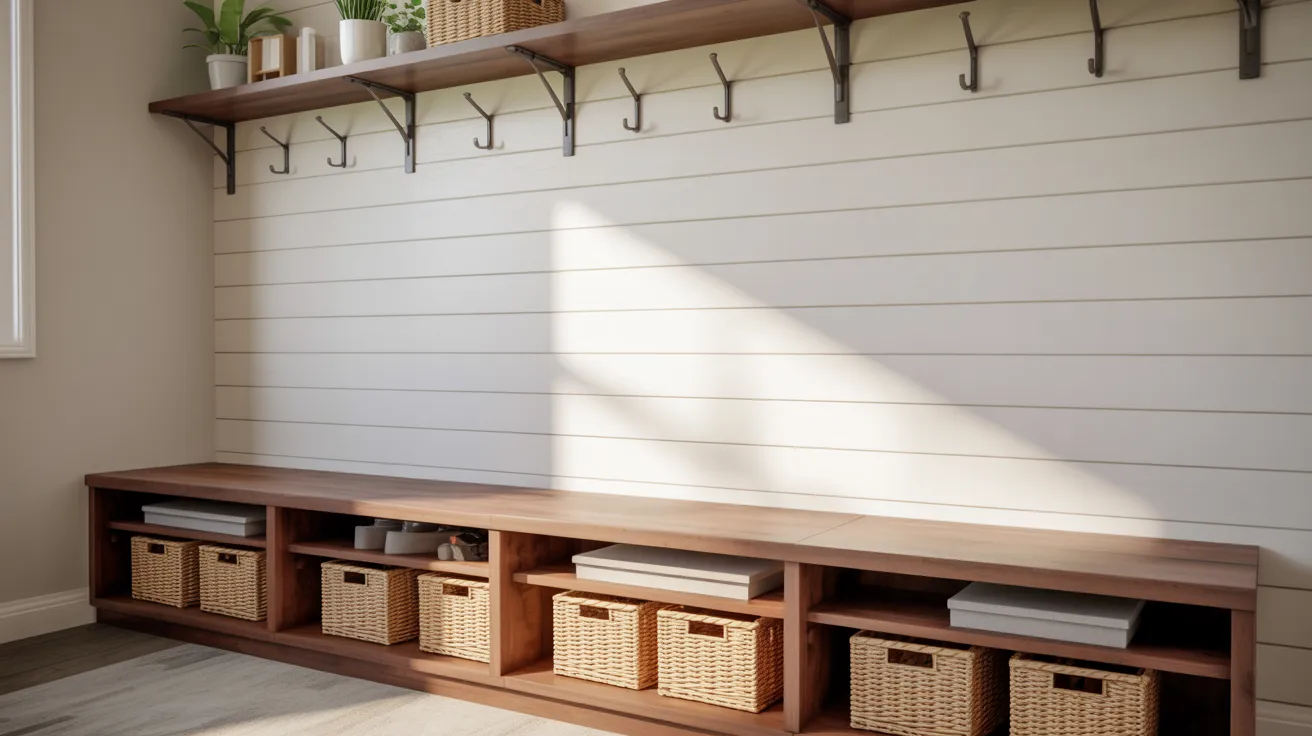
Matching bench depth to your home size and habits makes daily use much easier.
Small Mudrooms
Stick to 14-16 inches to keep things from feeling cramped. A slim bench still gives you a solid spot to sit and put on shoes.
Wall hooks above the bench can easily make up for limited under-bench storage.
Medium Homes
An 18-inch bench works great for medium-sized homes. It balances seating and storage without taking over the space. Most standard bins and baskets fit perfectly underneath at this depth.
Large Families
Go with 20-22 inches if you have the room to spare. Deeper benches allow wider cubbies and bigger storage bins for everyone.
Multiple people can also sit side by side much more comfortably.
Matching Depth With Design Style
A built-in bench with shaker-style doors looks best at 18-20 inches deep. A simple open bench with baskets works fine at 16-18 inches.
Let the function guide the style and the depth will follow naturally.
Mudroom Bench Depth for DIY Construction Planning
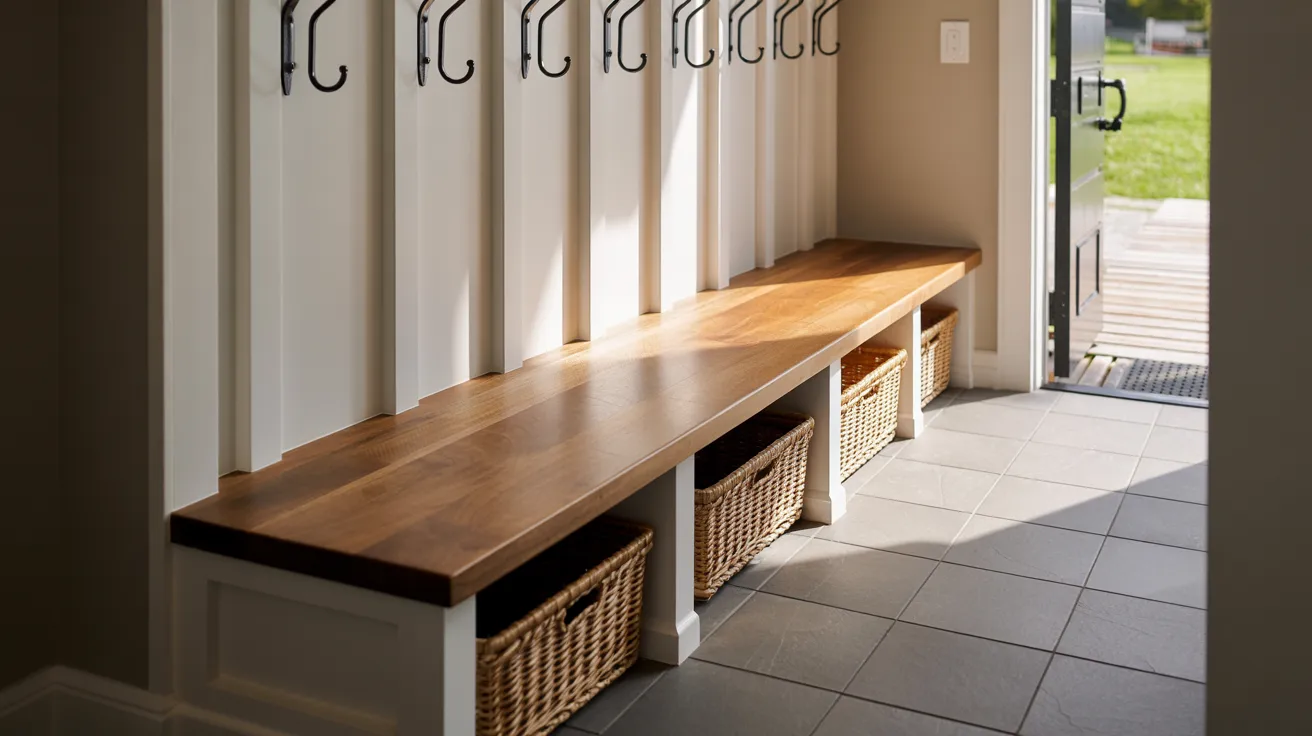
Good planning before you build saves time, money, and a lot of frustration later.
Recommended DIY Depth Range
For most DIY builds, 15-18 inches is the safest range. It's forgiving for beginners and works with standard lumber and plywood sizes.
Built-In vs Freestanding Bench Depth
Built-in benches can go slightly deeper because they are anchored to the wall. Freestanding benches should stay closer to 15-16 inches to stay stable without wall support.
Structural Stability
Deeper benches carry more weight. Make sure your frame is solid. Use 2×4 framing and add a back support if the bench is over 20 inches deep.
Material Choice
Plywood is great for deeper benches. It handles weight well and doesn't warp easily. Solid wood works too but can get costly at wider depths.
Storage Design Based on Bench Depth
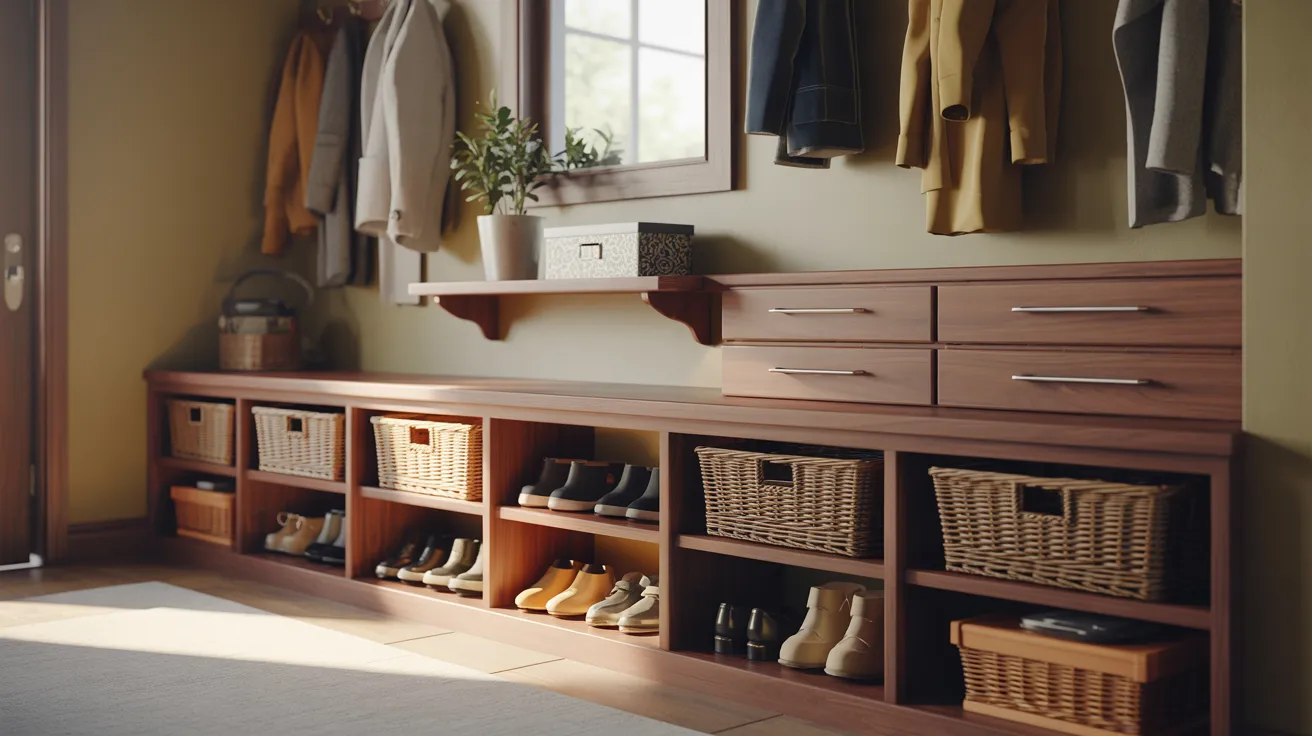
Your bench depth directly controls what kind of storage fits underneath and around it.
Under-Bench Baskets and Bin Sizing
At 16 inches deep, standard fabric bins fit snugly underneath. At 18–20 inches, you can fit deeper plastic bins or small rolling carts.
Choosing the right bin size starts with knowing your bench depth.
Cubbies, Drawers, and Hidden Storage
Deeper benches open the door to built-in drawers and cubbies that keep things neat. A 20-inch depth gives enough room for a full drawer slide without issues.
This makes deeper benches a smart pick for families who need real organization.
How Depth Affects Storage Capacity
More depth equals more room inside for bins, shoes, and gear. Only add depth if your space truly allows it. Unused depth is wasted space that makes your mudroom feel smaller.
Combining Vertical Hooks and Shelving
Add hooks above and shelves on the sides to get the most out of any bench depth. A 16-inch bench with good vertical storage can outperform a deeper bench with no wall organization.
Always think up, not just out, when planning your layout.
Common Mistakes to Avoid When Selecting Bench Depth
These are the errors that trip up most first-time builders, and they are easy to avoid.
Making the Bench Too Deep
Going past 22 inches in a small mudroom makes the space feel tight. You end up with storage you can't reach and a hallway that feels blocked.
Choosing Too Shallow for Comfort
A 12-inch bench is hard to sit on. Your legs hang off the edge and it feels unstable. Always aim for at least 14 inches.
Ignoring Door Swing and Walkway Clearance
This is the most skipped step. A door that opens into the bench is a daily frustration. Measure your door swing first.
Not Measuring Before Building
Always measure twice, cut once. Use tape on the floor to mark out the bench footprint before you build anything. It takes five minutes and saves hours of rework.
Pro Tips for Perfect Mudroom Bench Depth Design
A few simple tips can save you time, money, and a lot of rework before you start building.
- Mock it up first. Use painter's tape or cardboard on the floor to outline your bench before building. You will see right away if the depth feels too deep or too tight.
- Keep 36 inches of clearance. This is the standard walkway width and it makes the space feel open and easy to move through every day.
- Match depth to your habits. If you mostly use the bench for seating, 16 inches is fine. If storage is the priority, go with 18-20 inches instead.
- Balance comfort and function. The best bench is the one that works for your family every single day, not just the one that looks good in photos.
- Always measure before you cut. A few minutes of measuring can save hours of rework and wasted materials down the line.
- Think about future needs too. Your family's storage needs may grow over time, so building slightly deeper now can save you a rebuild later.
Conclusion
Picking the right mudroom bench depth does not have to feel complicated. I used to overthink it too. Once I started mocking up builds with tape on the floor, everything clicked.
Start with 18 inches if you are unsure. Adjust based on your space and how your family lives.
If this helped you, drop a comment below and tell me what depth you are going with. Share this post with a friend who is planning a mudroom build too. You've got this.
Frequently Asked Questions
What is the standard mudroom bench depth?
The standard mudroom bench depth is 18 inches. It works well for most spaces and fits common storage bins comfortably underneath.
Can a mudroom bench be 12 inches deep?
A 12-inch bench is too shallow for comfortable seating. It may work as a decorative ledge but is not practical for sitting or storage.
How deep should a mudroom bench be for kids?
For kids, 16-18 inches works well. It lets them sit easily and allows space for small cubbies or bins for shoes and bags.
Does bench depth affect storage capacity?
Yes. A deeper bench holds larger bins and allows for built-in drawers. Shallower benches limit storage but save floor space in tight mudrooms.
What is the minimum depth for a mudroom bench with under-seat storage?
You need at least 15 inches of depth to fit standard storage baskets underneath. Go to 18 inches for more storage options and easier access.